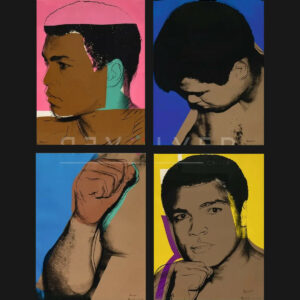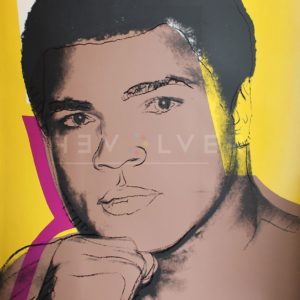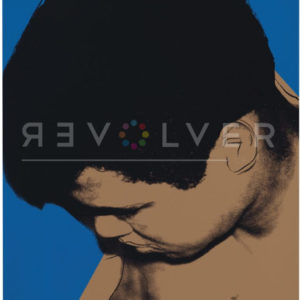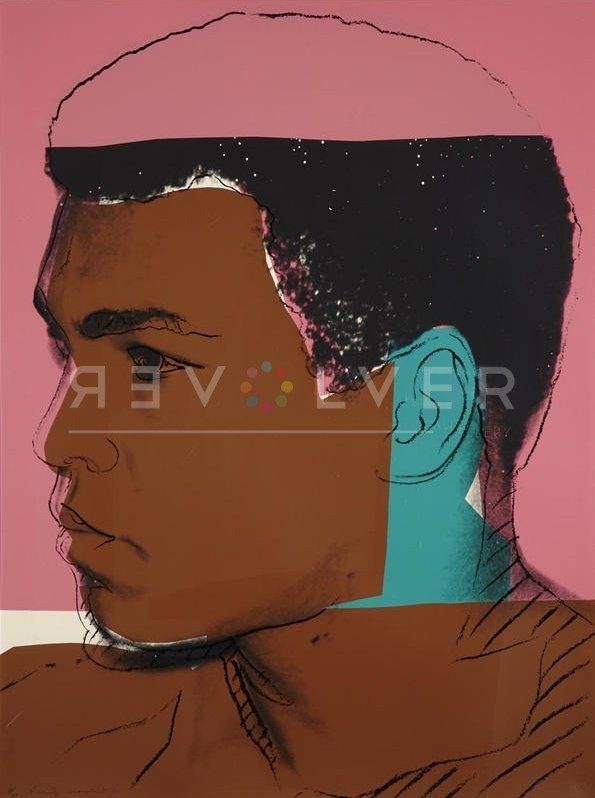
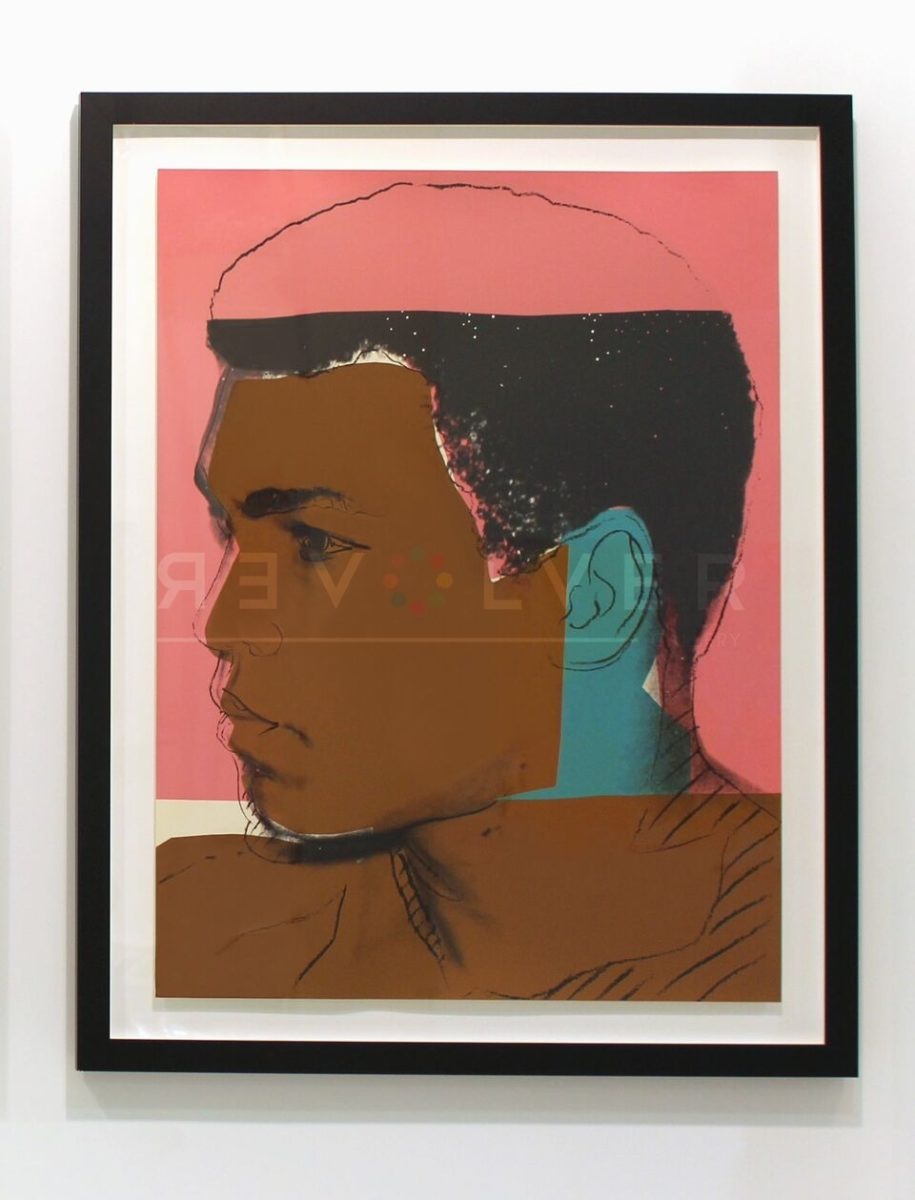
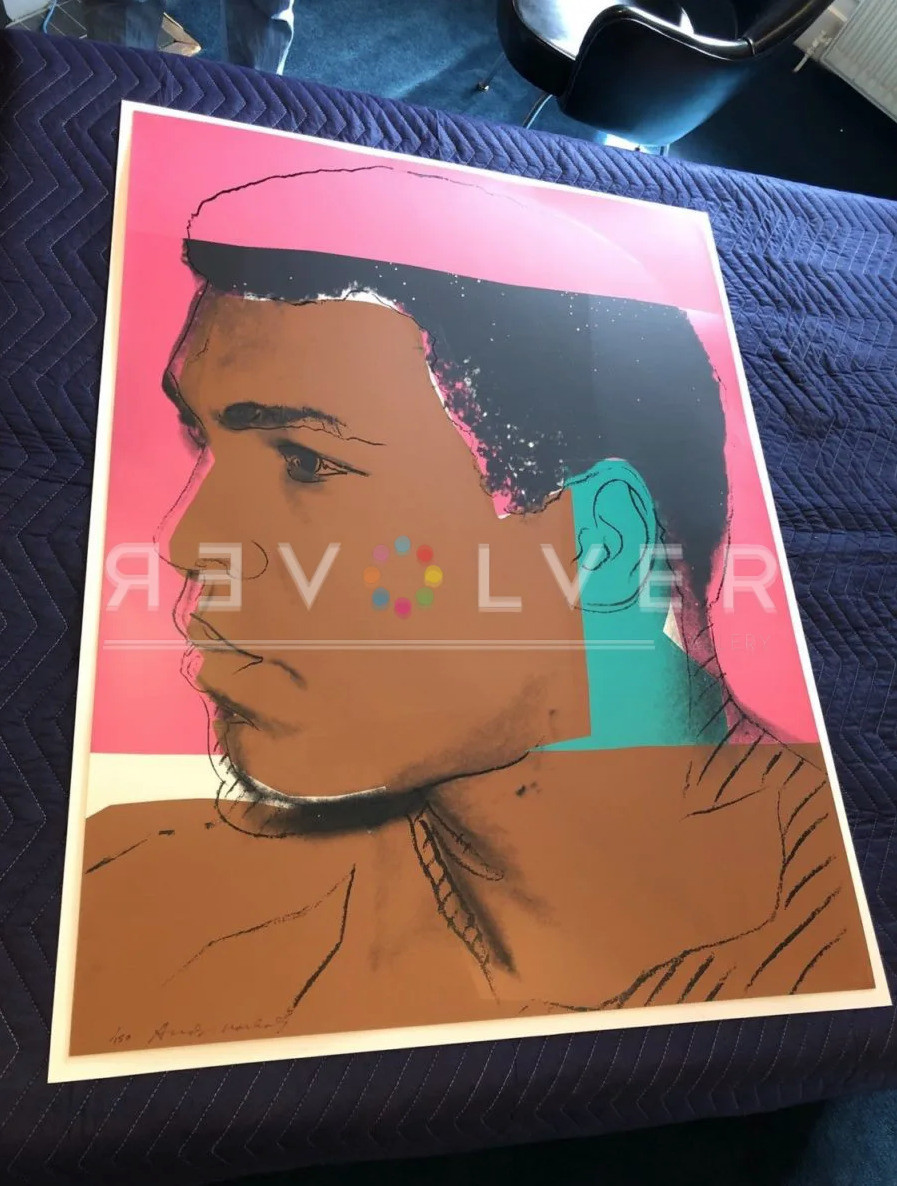
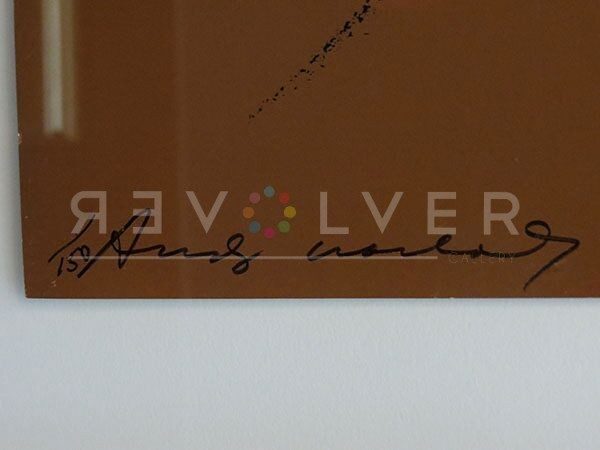
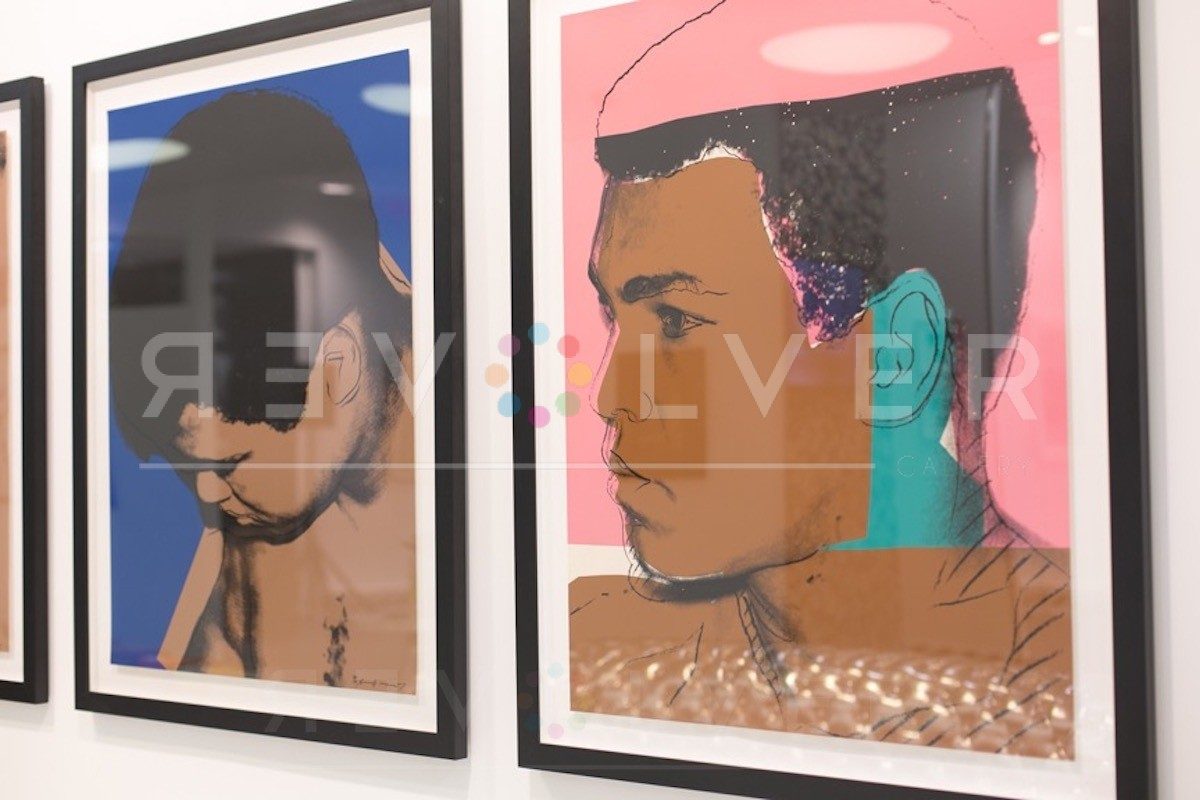
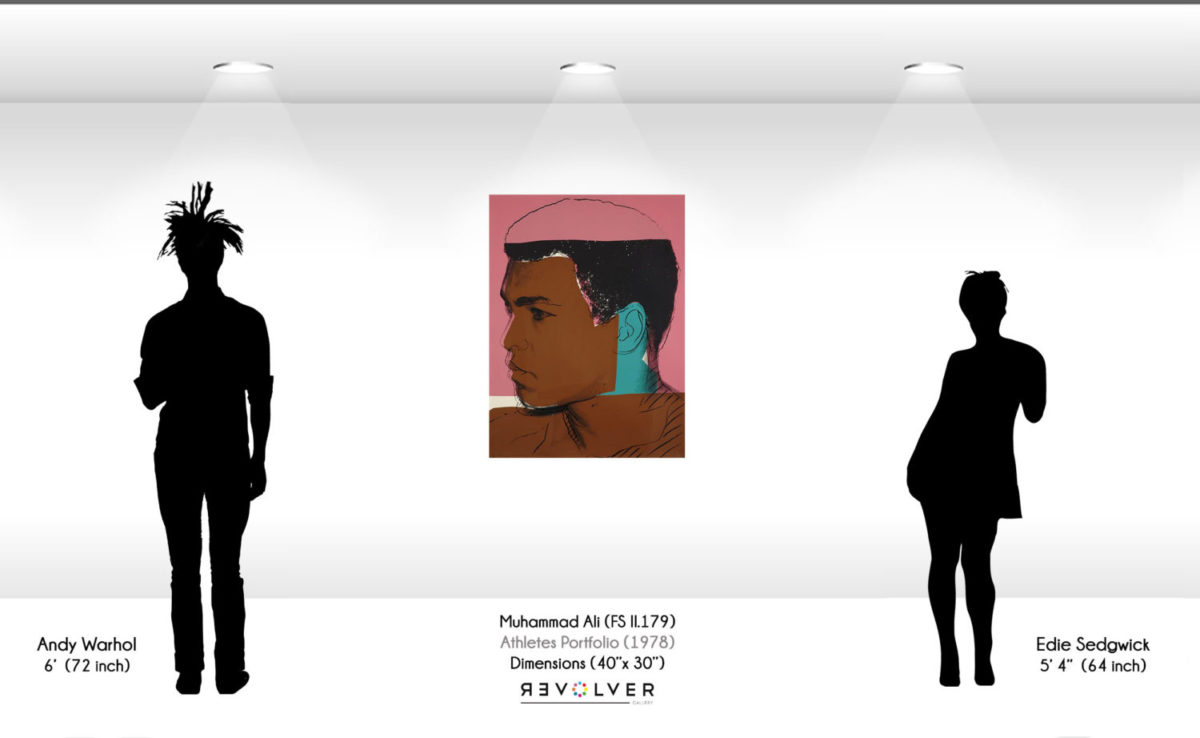

Muhammad Ali 179 by Andy Warhol a print from Warhol’s four-part Muhammad Ali series. It is part of a larger compendium of works in Warhol’s Athletes series (ca. 1977-79), which showcases ten of the finest and most revered superstar athletes of the decade. Commissioned by Richard L. Weisman, Athletes celebrates icons from a range of sports, like basketball player Kareem Abdul-Jabbar, golfer Jack Nicklaus, and even Pele. Audiences have the chance to engage with the athletes’ pop culture status as much as their athletic status through Warhol’s use of colors, textures, and form.
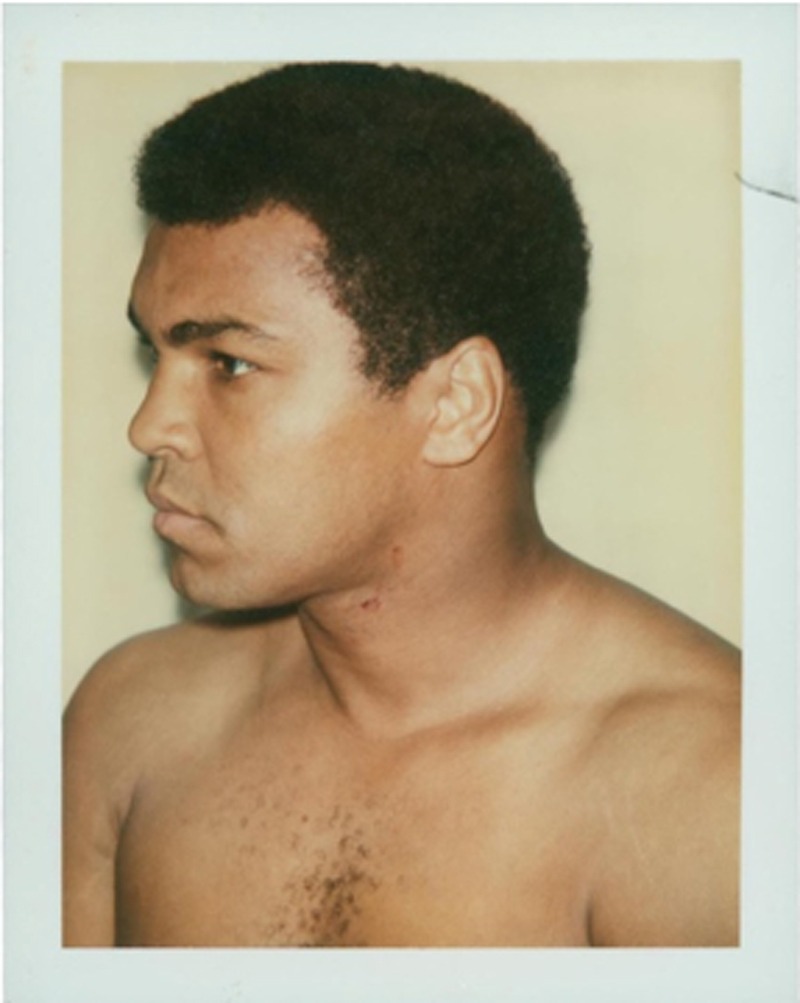
Muhammad Ali 179 is a left-facing profile screenprint of the boxing legend looking stoic and focused, as if bracing for a fight. Warhol contrasts Ali’s soft, sketch-like facial features against geometric, solid portions of warm brown and turquoise, with a large and dynamic pop of soft-pink in the background. Similar to Warhol’s Pele and Kareem Abdul-Jabbar portraits, this piece is warm and electrified with passes of bold colors. Warhol took the base photograph with his polaroid, and opted to make Ali more abstract, positing his expression in a more serious light than what was typical of Ali. The other Ali prints follow a similar suit by honing in on Ali’s athletic, combative alter ego. In Muhammad Ali 181, Warhol emphasizes the fighter’s strength by focusing on his balled fist and forearm.
It seemed inevitable that Ali would become a subject of Warhol’s work. In his book titled Exposures, Warhol described Ali as having “the most beautiful voice, the most beautiful hands, and the most beautiful face. And he can use all three at the same time. That’s why people will listen to him” (Warhol 210). It was, after all, Ali’s skill in boxing that graced him with a platform to use his voice and achieve an influencer status that stretched beyond the scope of athletics.
One of Ali’s most notable feats of activism was refusing to fight in the Vietnam War in 1967. Though he did not go to prison, he was banned from professional boxing for three years. Arguably, he became more famous after leaving the ring for good, when he continued to pursue civil rights activism through lecture tours in Europe. He indulged Warhol in one of these lectures at his training camp, “Fighter’s Heaven,” when Warhol took this photoshoot. Perhaps what Warhol captured in his Muhammad Ali series is not the physical strength of an unmatched boxer, but Ali’s relentless fight for civil rights.
Warhol created Muhammad Ali 179 to emphasize his role as a world class athlete and personality. The print’s appearance as a piece of the Athletes portfolio signifies Ali’s profound role in the public sphere, as well as the impact of Warhol’s art on the American mythos of these athletes.
Photo Credit: Andy Warhol with Muhammad Ali at Ali’s training camp in Deer Lake on August 18, 1977. Photo by Victor Bockris.