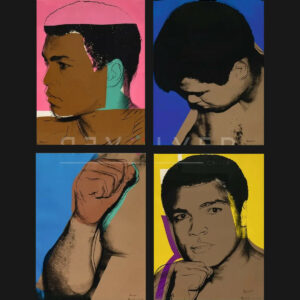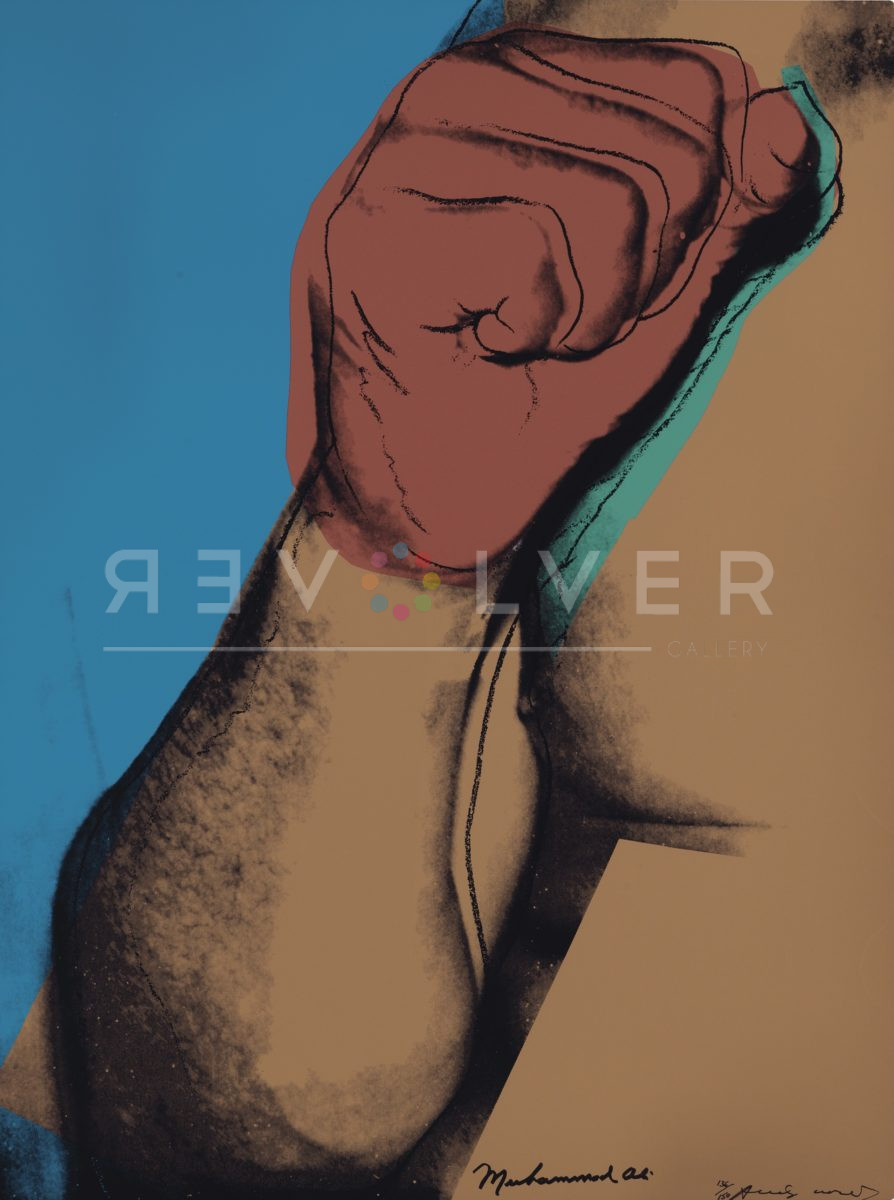
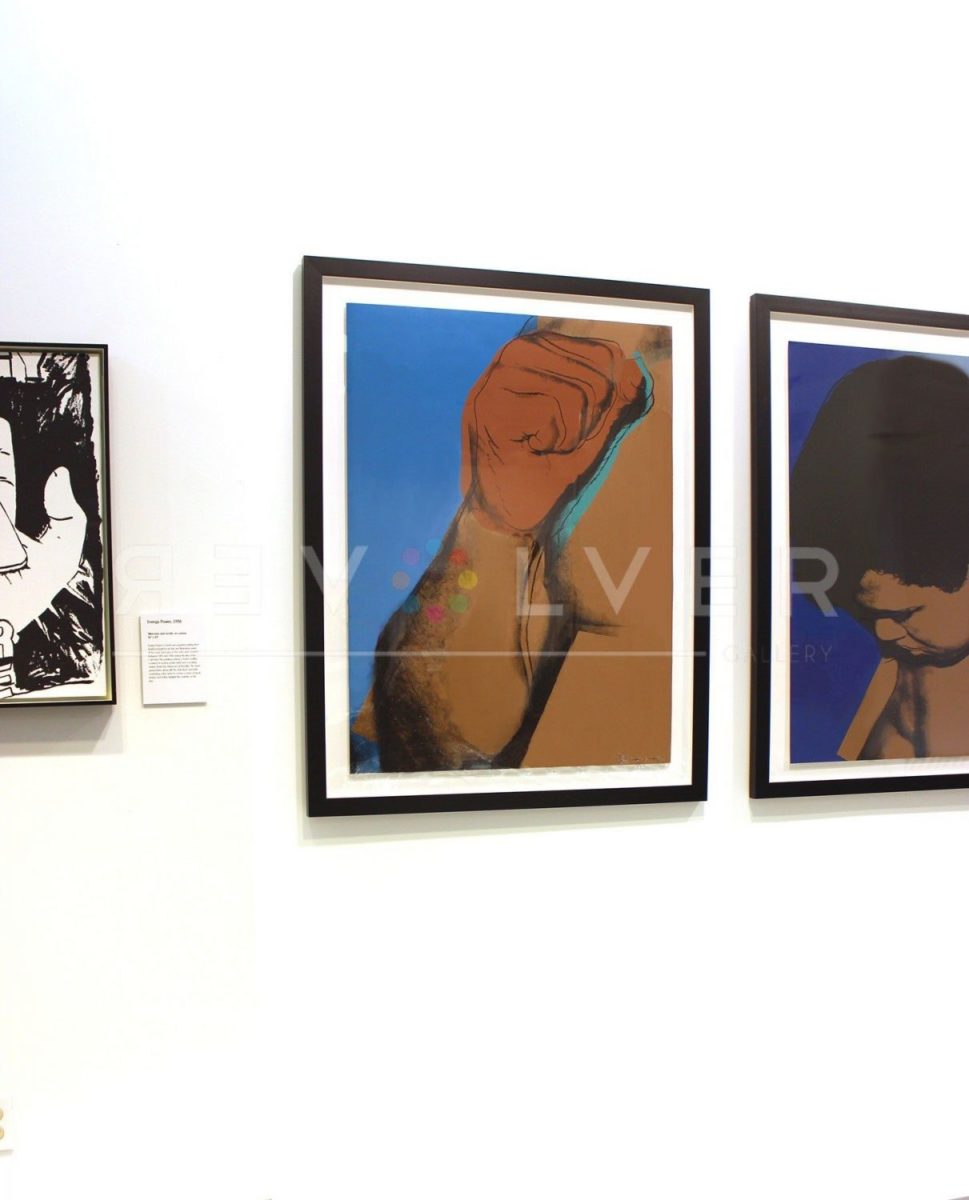
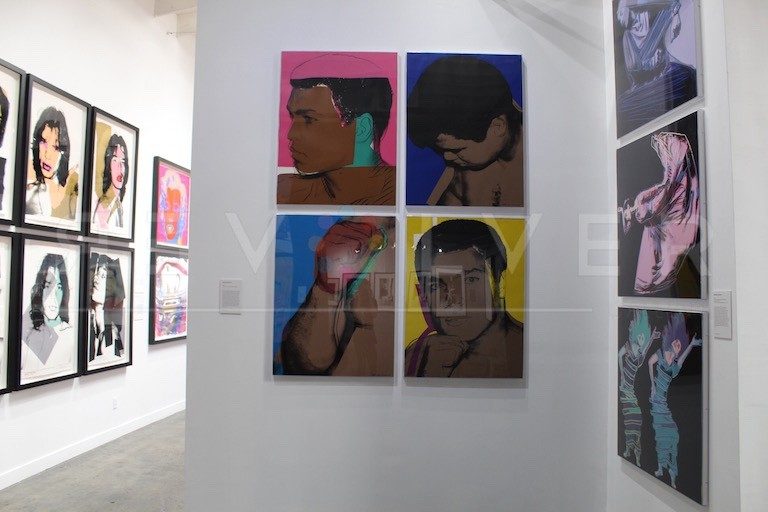
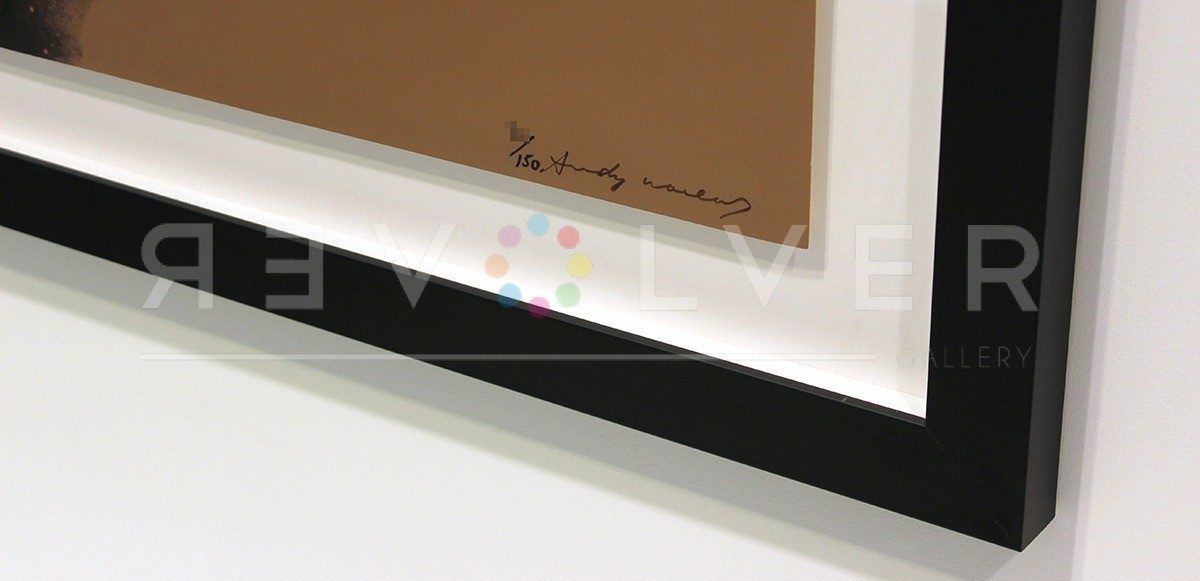
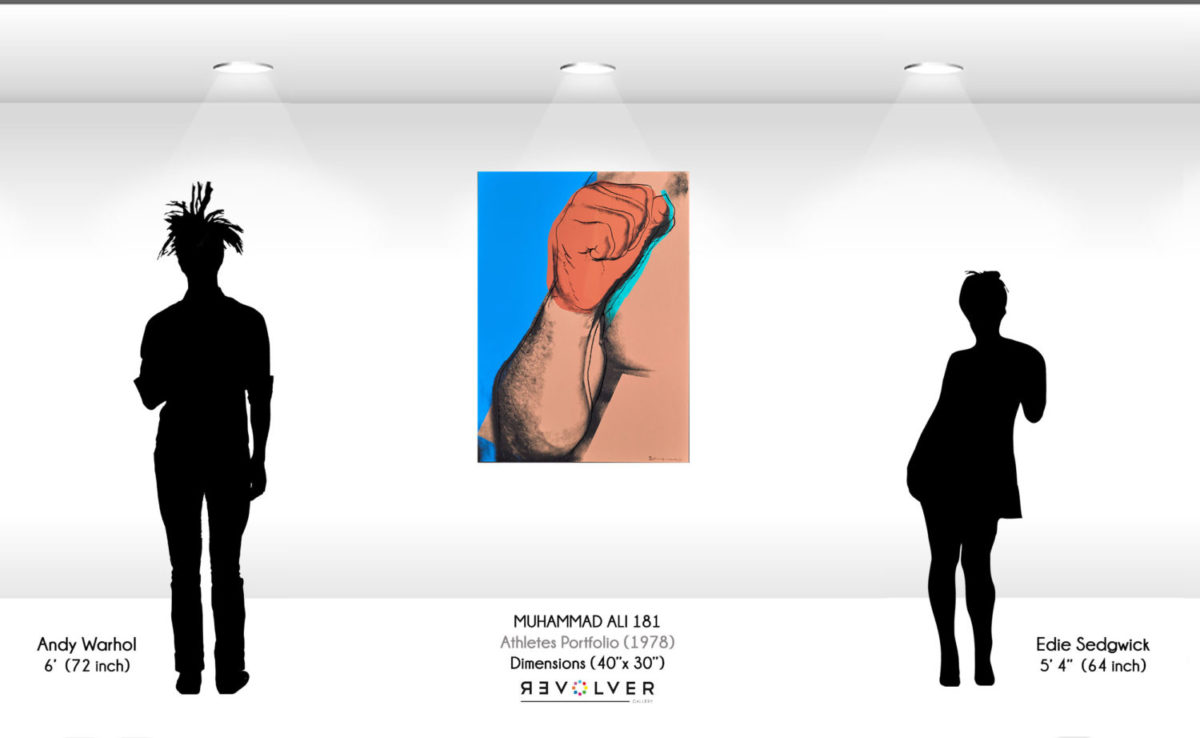

Muhammad Ali 181 by Andy Warhol is one of four portraits in the 1978 Muhammad Ali portfolio. Andy Warhol screenprinted each portrait in the suite on Strathmore Bristol Paper. The Muhammad Ali portfolio is a part of Warhol’s larger Athletes series, commissioned by Richard Weisman in 1977.
The Athletes series features ten of the most talented athletes of the time. Alongside Muhammad Ali 181, the series includes O.J. Simpson, Dorothy Hamill, Pelé, Jack Nicklaus, Rod Gilbert, Tom Seaver, Willie Shoemaker, Chris Evert, and Kareem Abdul-Jabbar. Commissioner Richard Weisman selected each athlete, and Warhol photographed them with his trusty Polaroid camera. He then used Polaroid shots as the source images for the portraits.
The Muhammad Ali portfolio stands apart from the Athletes series as a closer study of the famous boxer. In fact, the final portrait of Ali used in the Athletes series is not from the Muhammad Ali portfolio at all.
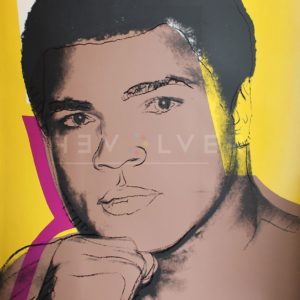
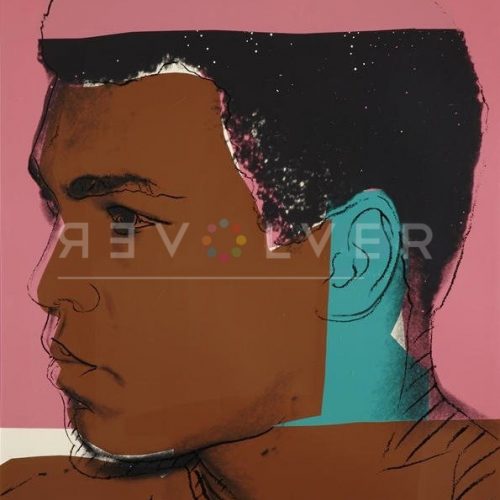
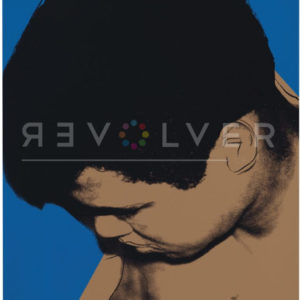
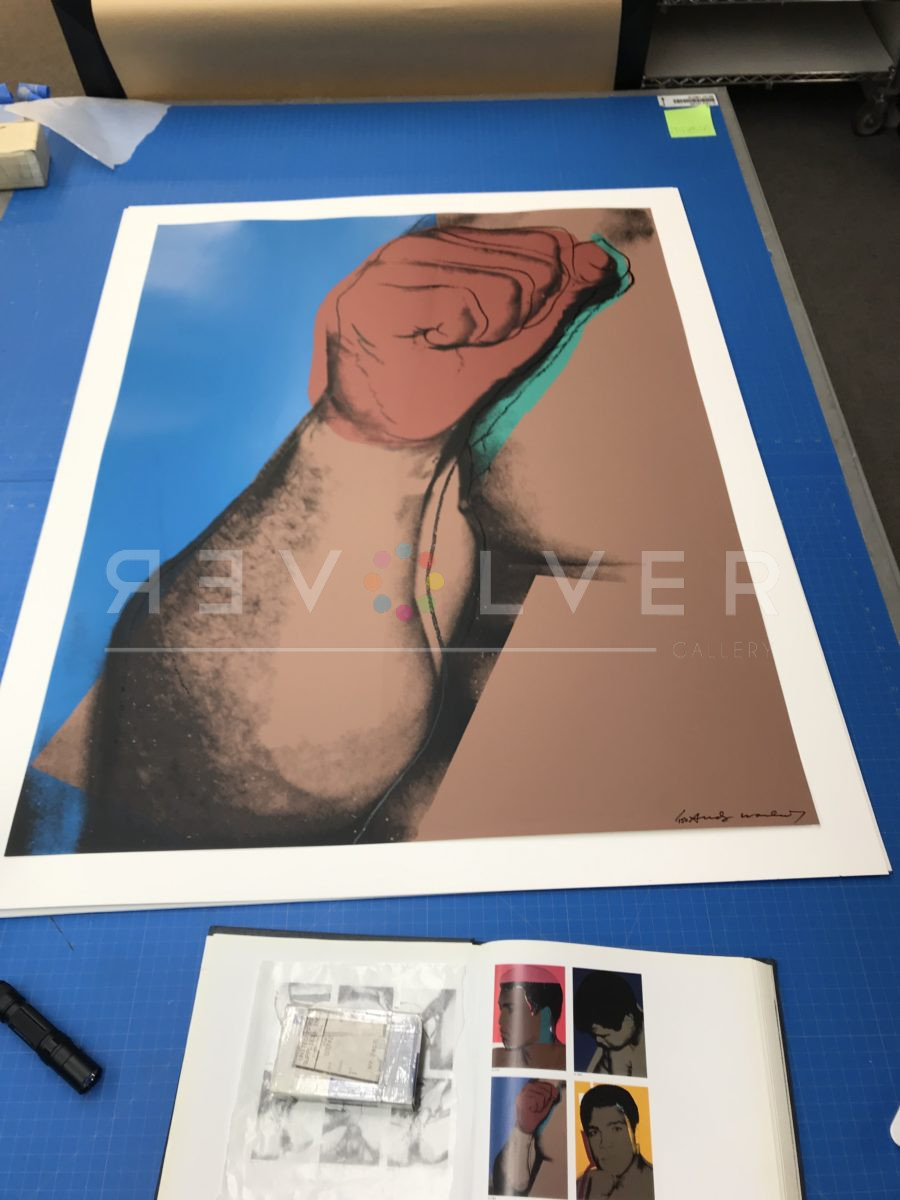
In Muhammad Ali 179, 180, and 182, Warhol captures Ali’s facial features; he does so from a variety of angles, capturing the boxer in profile, gazing downward, and facing the front. Muhammad Ali 181 is unique to this portfolio in that the sole subject of the portrait is Ali’s hand.
Many athletes from the Athletes portfolio have prominent depictions of sports equipment in their portrait. Figure skater Dorothy Hamill, for example, is pictured with her skates while soccer star Pelé appears with a soccer ball. In the Athletes portfolio portrait, Muhammad Ali is similarly depicted, with his hands—the equipment of his profession—in fists guarding his face. Ali poses in the Orthodox stance, his standard fighting configuration with his strong right fist toward the back.
With Muhammad Ali 181, Warhol separates the equipment from the athlete, honing in on Ali’s hands as tools or equipment of his trade. In the portrait, Ali’s clenched fist appears in a block of burnt red against a blue background, with a blue outline that clearly distinguishes it from his chest. The burnt red is almost a blood-like color, highlighting Ali’s legendary power. However, the separation between body and fist seems to invite the audience to consider Ali as a fragmented figure: as a man and an athlete, or a public figure. This fragmentation reflects Warhol’s fascination with the fame and celebrity that may accompany a career as a professional athlete. After all, that was his primary reason for completing the commissioned portfolio.
Warhol said of his Athletes series: “I really got to love the athletes because they are the really big stars.” Just as Warhol portrays the fame of movie stars with nuance, Muhammad Ali 181 depicts the complexities of Ali’s fame. Ali’s hand, signifying the skills for which he gained notoriety, is the subject of the portrait, not Ali himself. Thus, Muhammad Ali 181 is a striking portrait of Ali’s legacy and fame, rather than the boxer himself.
Photo Credit: Andy Warhol with Muhammad Ali at Ali’s training camp in Deer Lake on August 18, 1977. Photo by Victor Bockris.