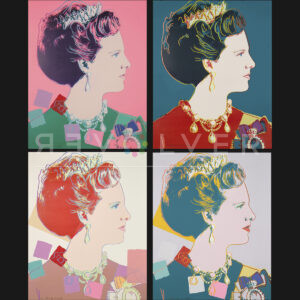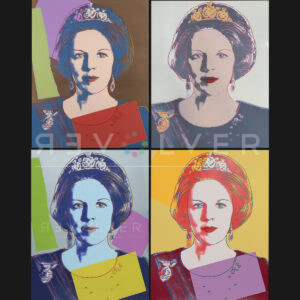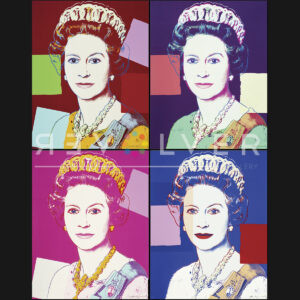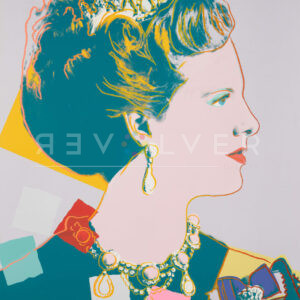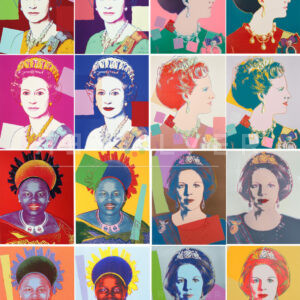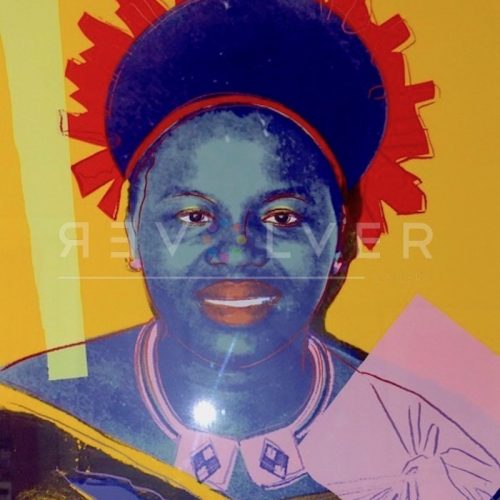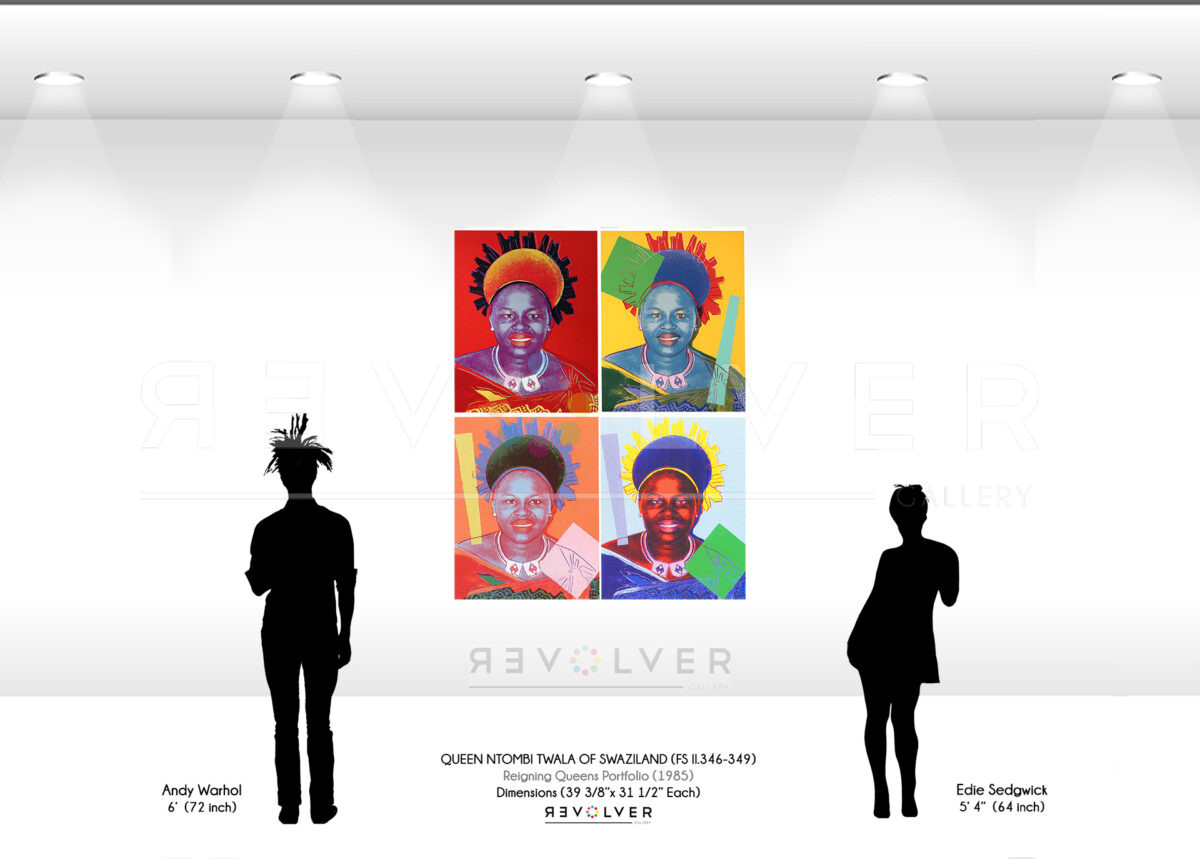
Queen Ntombi Twala of Swaziland by Andy Warhol presents the monarch in a frontal, tightly cropped composition that emphasizes dignity and presence. Warhol saturates the image with radiant color, layering vivid yellows, greens, blues, and reds across her face and garments. Sharp linework defines her features, while abstract color fields frame her head like a halo. Her jewelry and crown emerge through contrast and placement, anchoring the portrait in symbols of authority while Warhol’s palette transforms the image into a striking Pop statement.
The Complete Queen Ntombi Twala of Swaziland Portfolio is comprised of FS II.346, FS II.347, FS II.348, and FS II.349.
Queen Ntombi Twala of Swaziland and the Reigning Queens Portfolio
Queen Ntombi Twala of Swaziland comprises four silkscreen prints from Andy Warhol’s Reigning Queens portfolio, released in 1985. The full series includes sixteen prints and also features Queen Elizabeth II, Queen Beatrix, and Queen Margrethe II. Collectors regard the portfolio as one of Warhol’s most ambitious late projects, uniting political power and celebrity imagery within a single body of work.
Queen Ntombi Twala rules Eswatini, formerly Swaziland, a nation in southern Africa. She assumed the role of queen regent in 1983 and ascended fully to the throne in April 1986. When Warhol released Reigning Queens, her reign still unfolded, lending the portrait a sense of uncertainty and immediacy. She remains the only queen of color represented in the portfolio, giving her presence particular historical and cultural weight.
Power, Celebrity, and Representation
Warhol’s work consistently returns to fame, visibility, and mass production. He saw official portraits, currency, and stamps as tools that repeat power through images. In Reigning Queens, he applies this logic to female rulers, including Queen Ntombi Twala of Swaziland, expanding his long-standing interest in iconic women beyond entertainers such as Marilyn Monroe and Elizabeth Taylor. By doing so, Warhol reframes monarchy as another form of global celebrity shaped by repetition and public recognition.
Color, Ornament, and Authority
In the Queen Ntombi Twala prints, Warhol uses bold color blocking and layered outlines to guide the viewer’s eye. He highlights jewelry and regalia with deliberate contrast, reinforcing the visual language of prestige. At the same time, his abstract patches disrupt realism, reminding viewers that power operates through images as much as through tradition. These works showcase Warhol’s mature screenprinting technique and his ability to balance reverence with Pop stylization.
Queen Ntombi Twala of Swaziland in Warhol’s Larger Body of Work
Within Warhol’s late portraiture, the Queen Ntombi Twala series stands as a clear statement on authority and visibility. Moreover, her presence introduces a different cultural register within the portfolio. By treating monarchy with the same visual vocabulary as celebrity, Warhol collapses distinctions between inherited power and manufactured fame. These prints underscore his belief that images shape influence, securing their place as essential works from the final decade of his career.
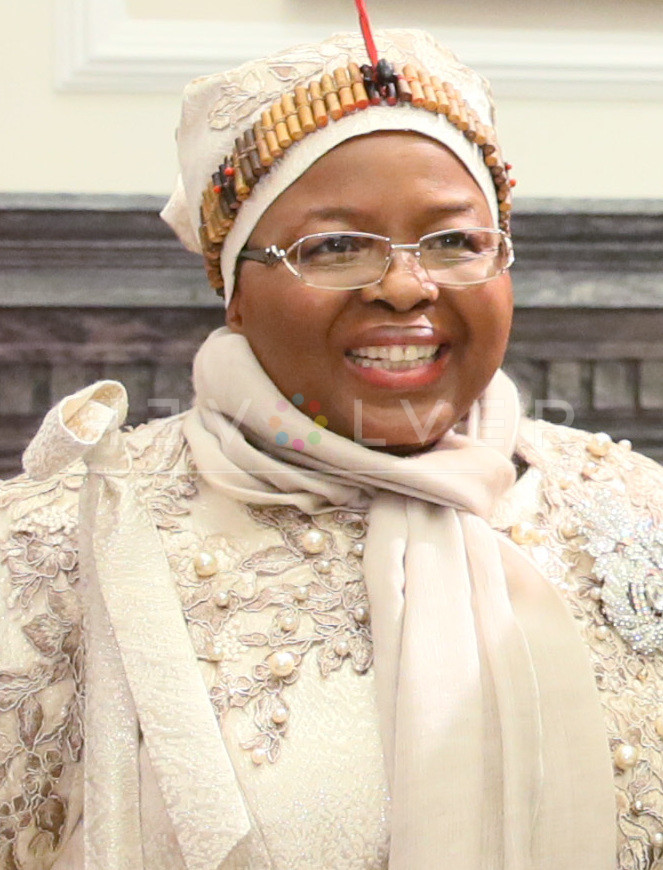
Photo credit: Queen Ntombi Twala, 2016. Photographer unknown.