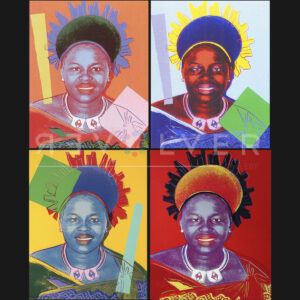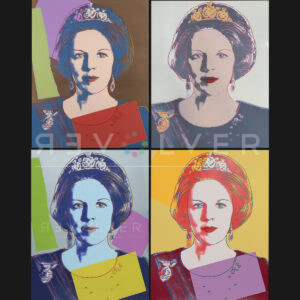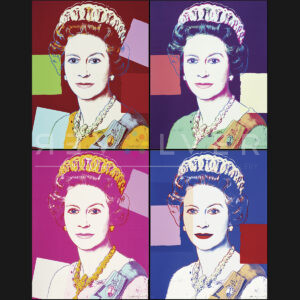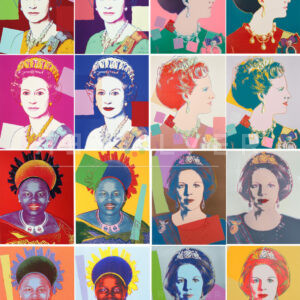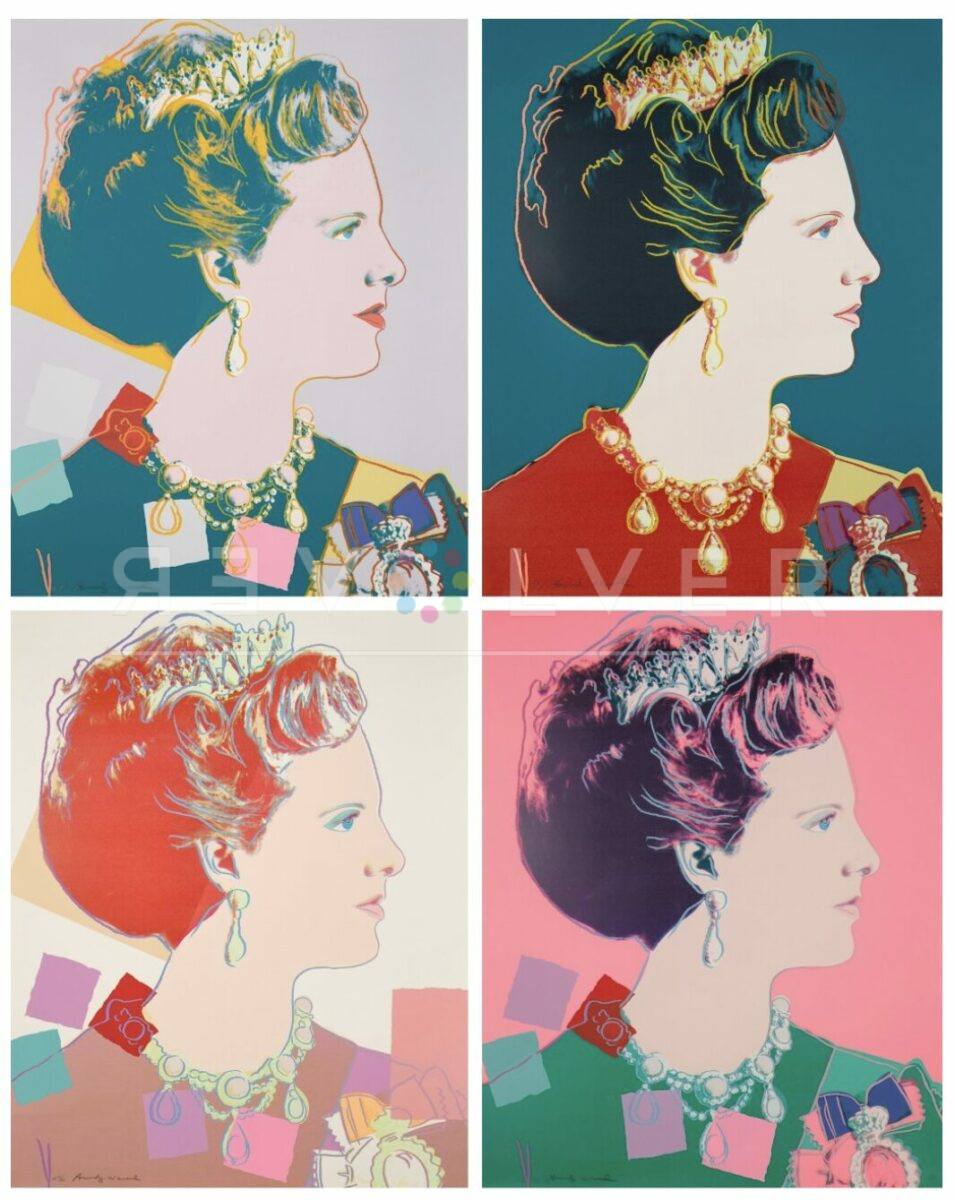
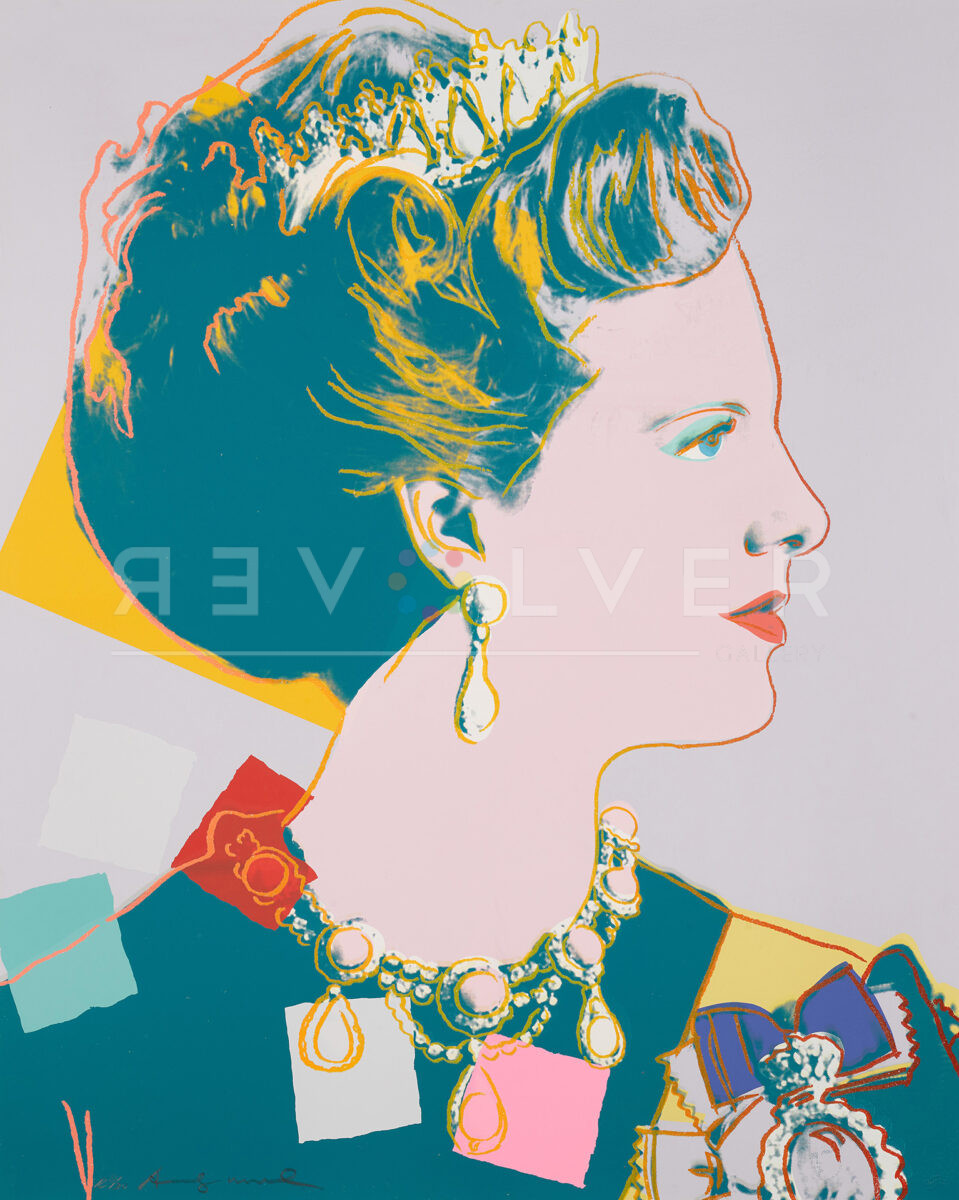
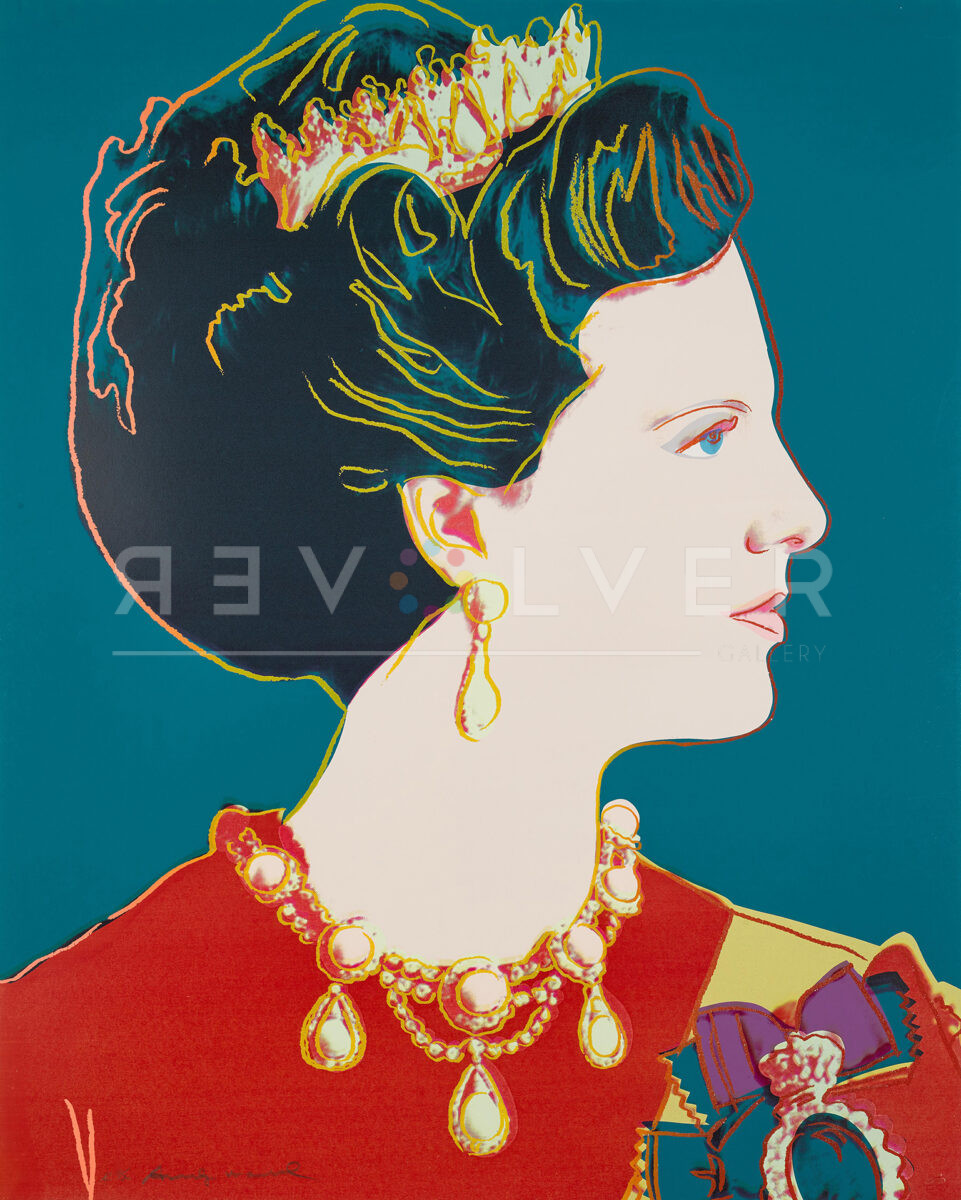
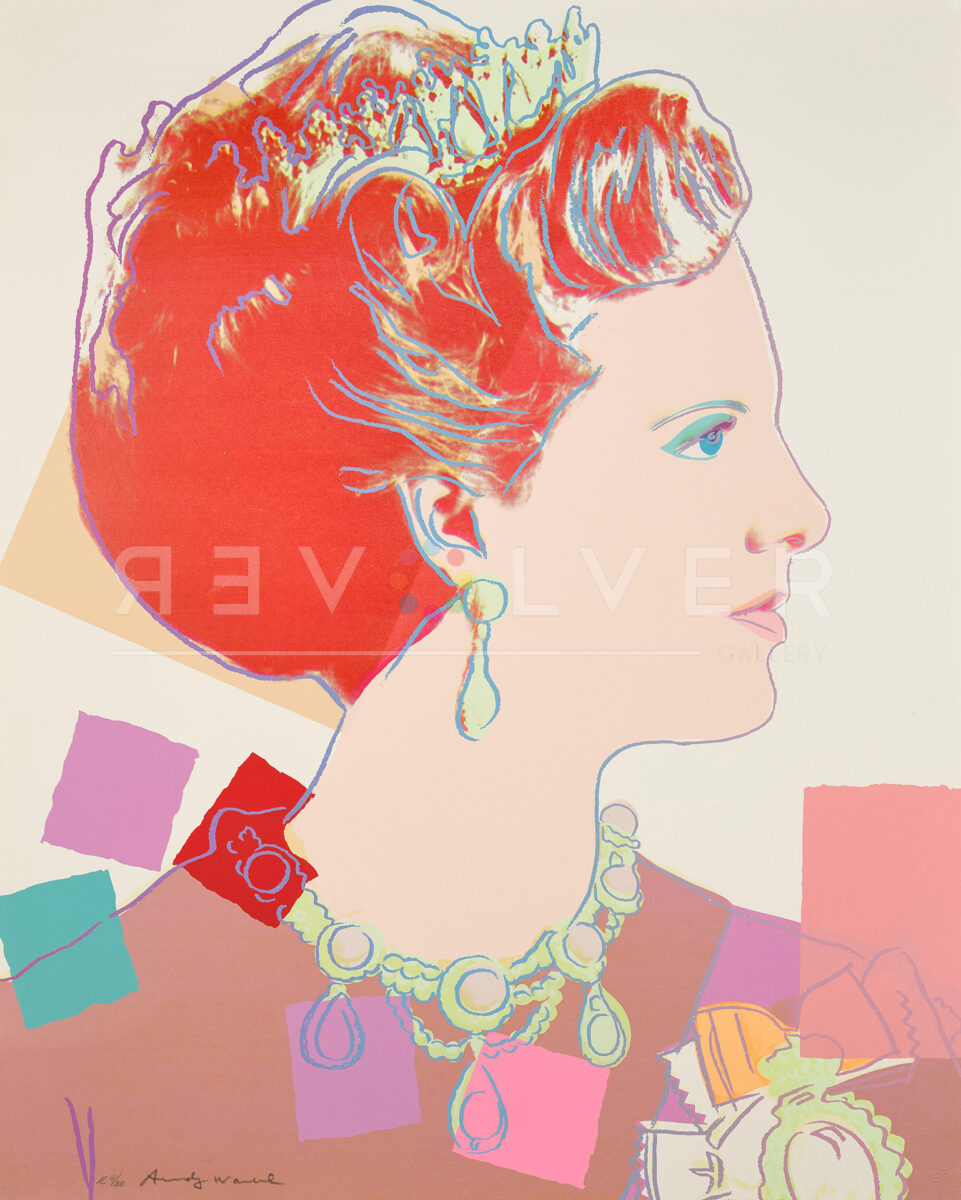
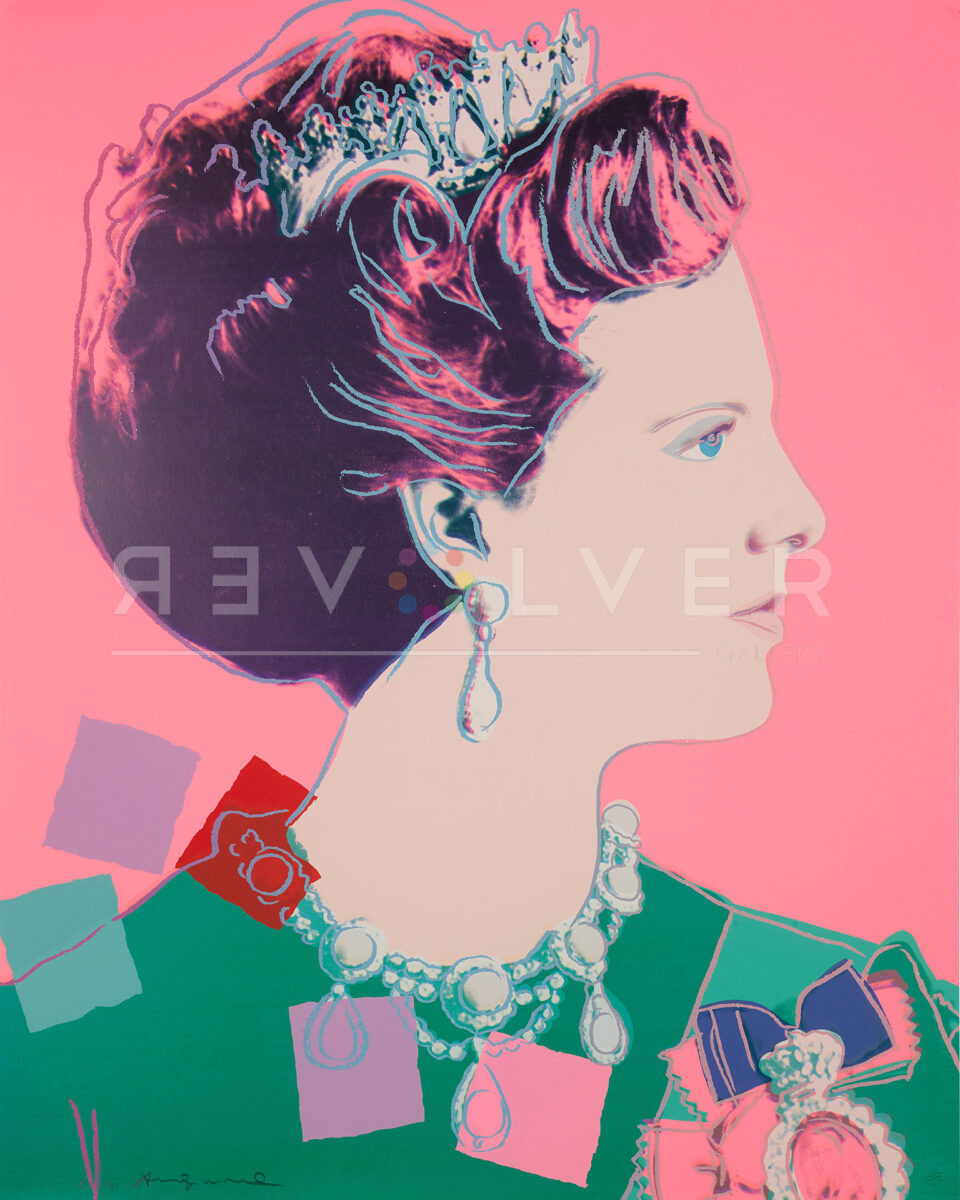
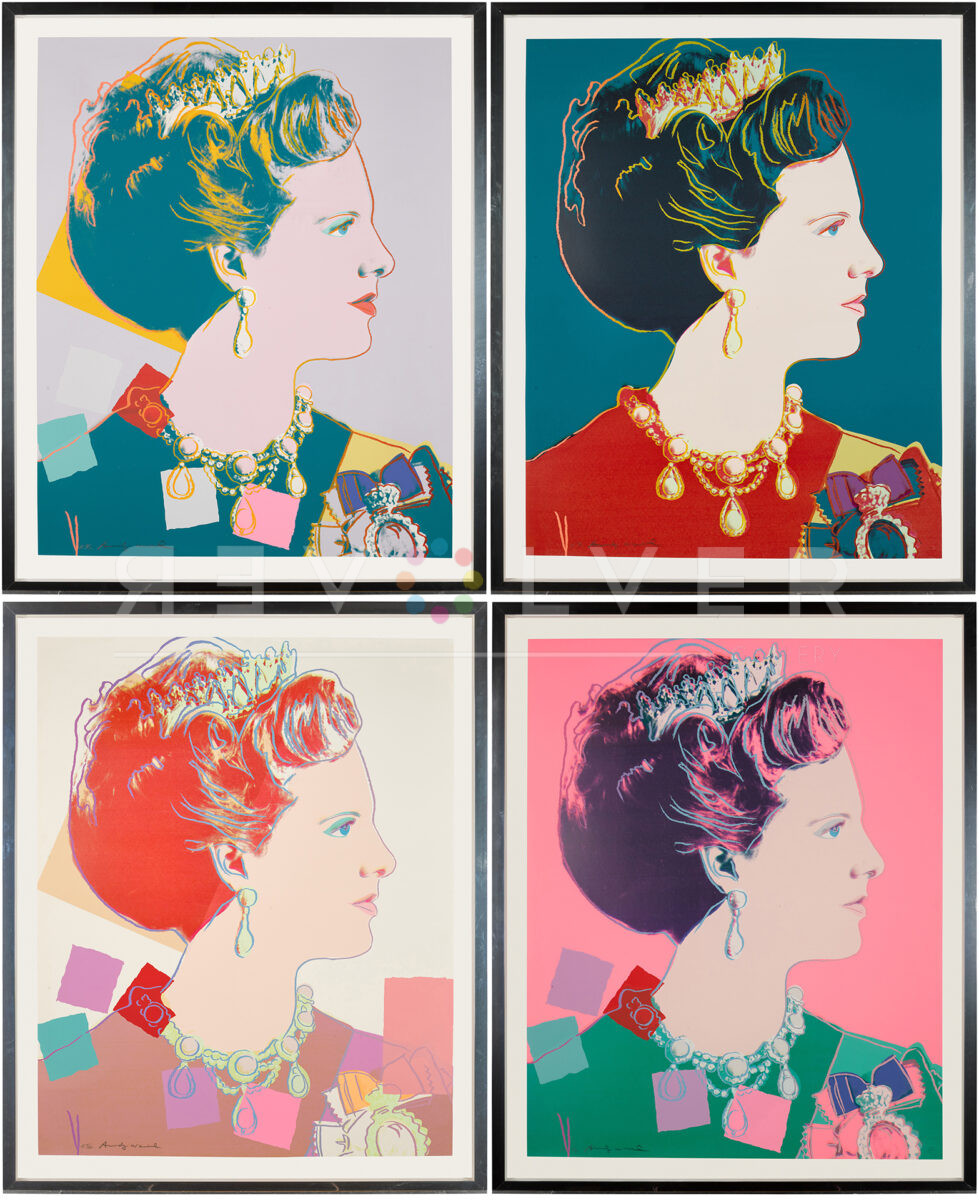
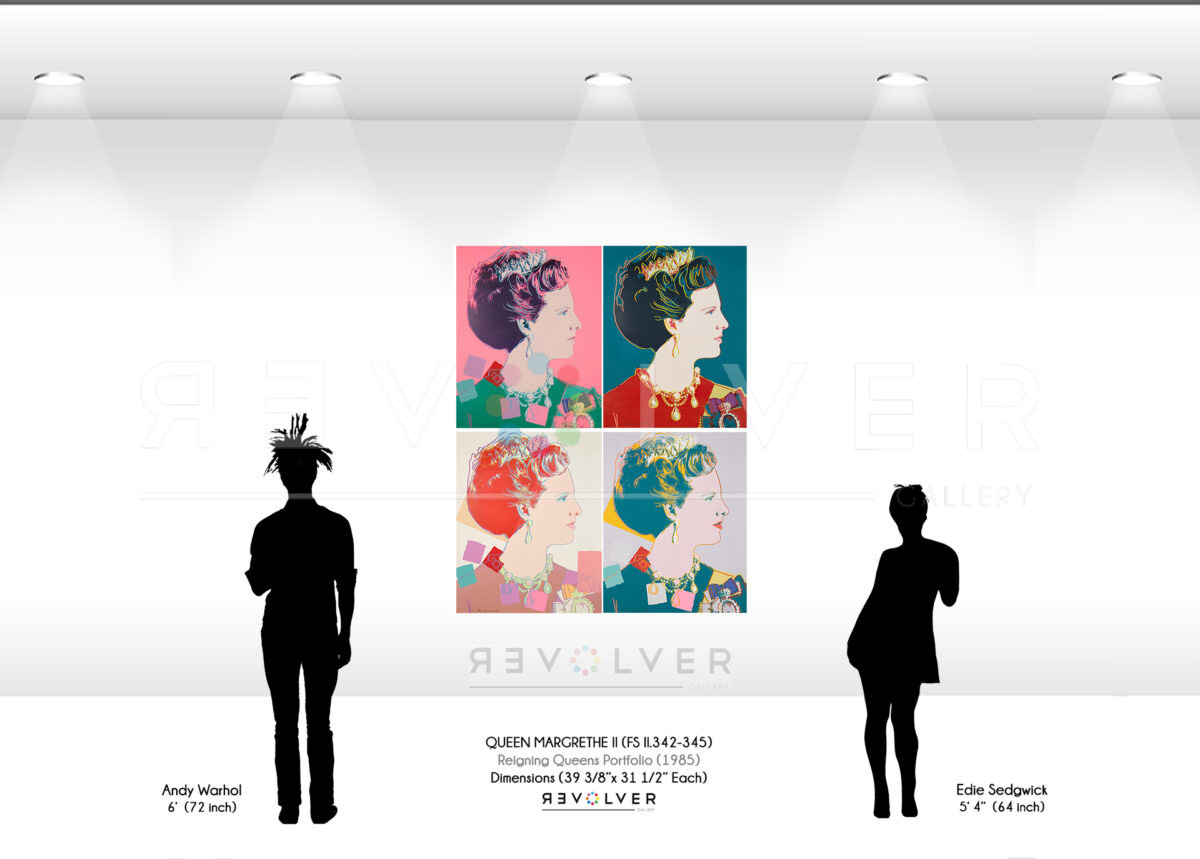
Queen Margrethe II of Denmark by Andy Warhol is a series of 4 screenprints from the artist’s Reigning Queens portfolio published in 1985. The full portfolio also includes Queen Ntombi Twala of Swaziland, Queen Elizabeth II of the United Kingdom, Queen Beatrix of the Netherlands.
Queen Margrethe was born on April 16th, 1940, and took the throne in January of 1972 after the passing of her father, Frederick IX, and is still in power today. When she succeeded her father, she became the first ruling queen of denmark since 1412. As of Queen Elizabeth II’s death in September of 2022, Queen Margrethe is currently the only queen regnant in Europe.
Although we usually think of Warhol as a portraitist of rock stars, actresses, and ‘celebrities,’ Reigning Queens is hardly the artist’s only foray into the images of global leaders. In fact, by painting portraits of people who we don’t often think of as celebrities in the traditional sense, Warhol was able to expand his generation’s perception of the concept of celebrity itself—allowing the term to encompass athletes, presidents, businesses men and women, and global figures. Like the Queens, some of Warhol’s politically-natured works include Mao, Vote McGovern, the DNC-commissioned Jimmy Carter portraits, and the Lenin portfolio. In Reigning Queens, Warhol chose to represent women monarchs in an eloquent way, presenting them in a manner that highlights their mystique and powerful femininity,
Warhol wasn’t interested in showing this series in America. In fact, he became angry with George Mulder, a print publisher, for showing the portfolio. Warhol expressed his frustration in his diary. “I had my opening at Leo Castelli’s to go to, of the Reigning Queens portfolio that I just hate George Mulder for showing here in America. They were supposed to be only for Europe—nobody here cares about royalty and it’ll be another bad review” (1985).
Even though the subjects in this series are royalty, Warhol presents them as celebrities similar to his other works. Fame, power, and glamour all fascinated Warhol in a similar way. By using bold colors, Warhol effectively delivers his pop-art treatment to a group of royal women. Furthermore, his color blocking places emphasis on the characteristics (such as their elegant jewelry) that evoke the Queens’ powerful opulence and prestige.
Warhol’s use of colorful “patches” in the Queen Margrethe II and the other prints in the portfolio demonstrate a recurring style in the evolution of his design in the 1970s and 1980s. The portraits contains some visual elements of collage, which can also be seen in the artist’s Mick Jagger and Ladies and Gentlemen portfolios. Moreover, in Queen Margrethe 342, 344, and 345, the patches seem to be intentionally placed to bring our attention to the queen’s jewelry.
Warhol also draws our attention up to the Queen’s hair, emphasizing the tidy and perfect nature of her appearance. Ultimately, our eyes are led to the crown itself. The crown is the most evident detail in all the portraits of Reigning Queens, separating the women from other celebrities he has printed and canonizing them as powerful monarchs who rule over nations.
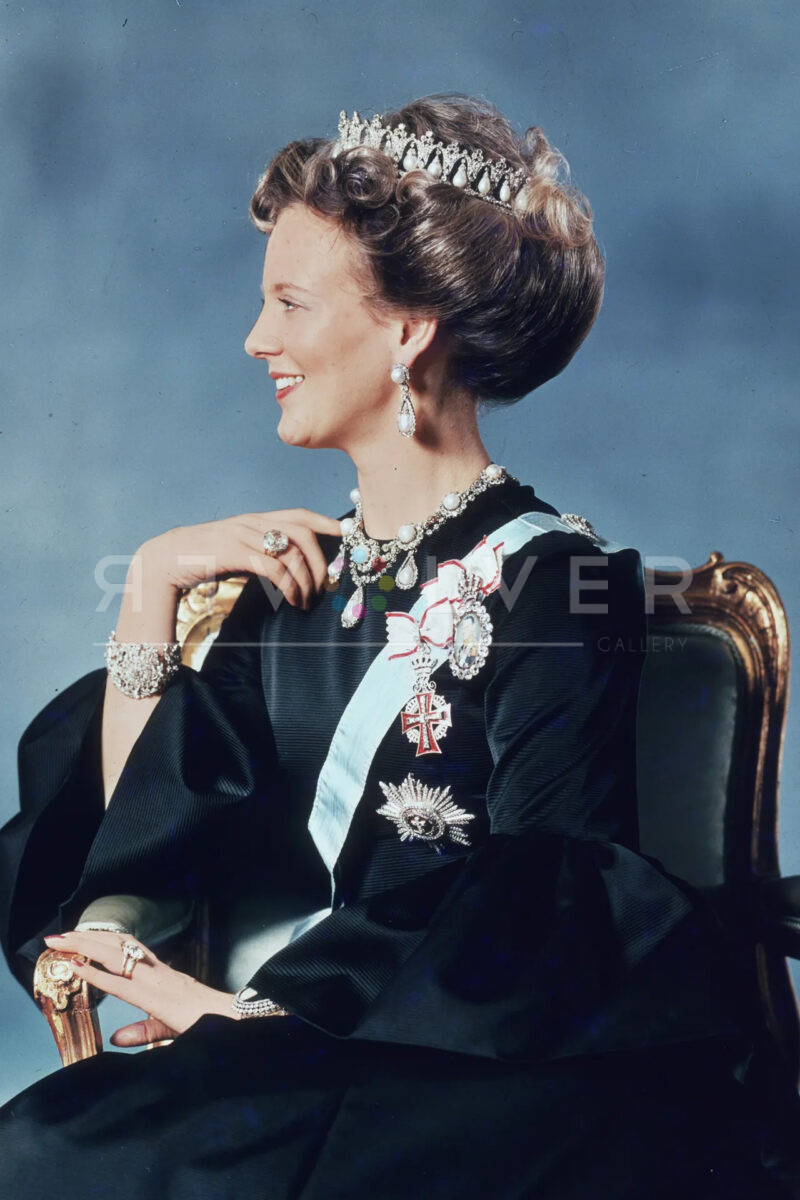
Photo credits:
- The first official photograph of Queen Margrethe II of Denmark after her ascension to the throne in 1972. Courtesy of the Hulton and Getty archives.
- Andy Warhol signing an offset lithograph that was issued for the promotion of the print of Queen Beatrix of the Netherlands. Unknown photographer.