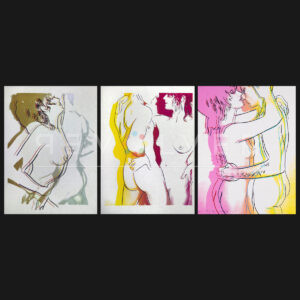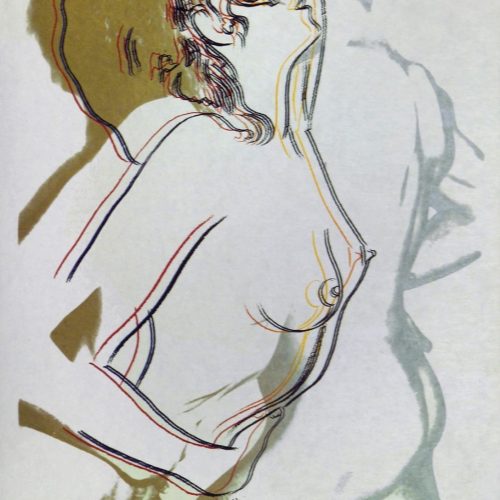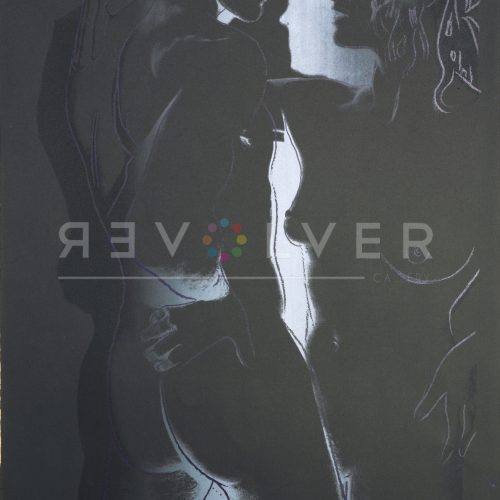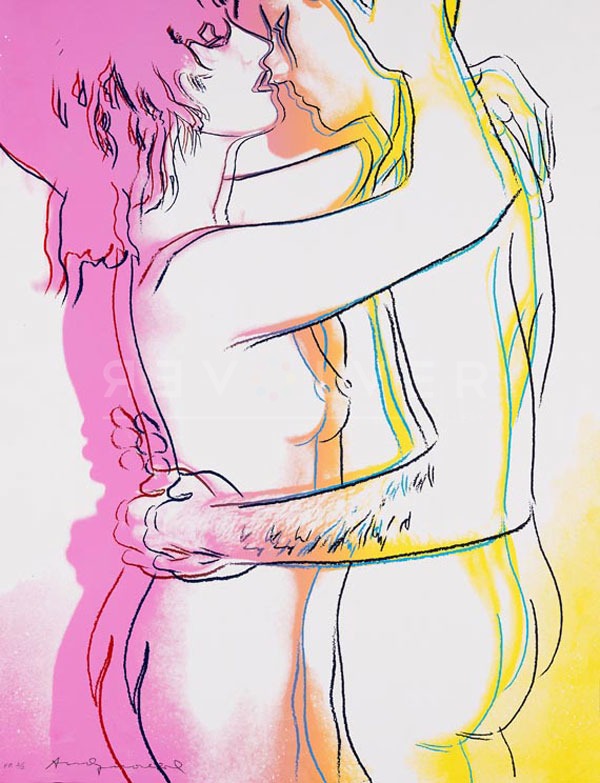
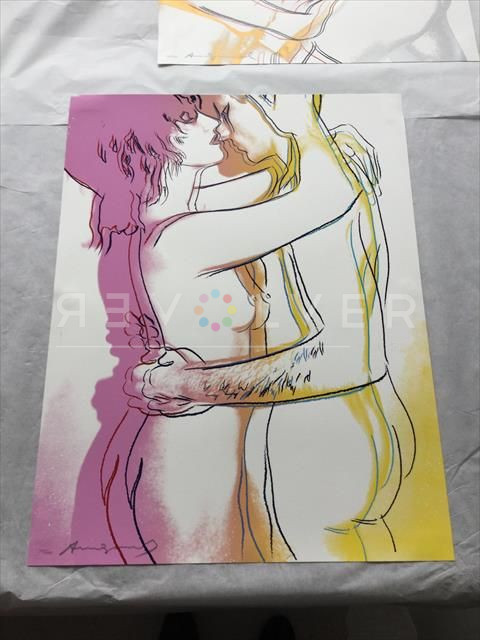
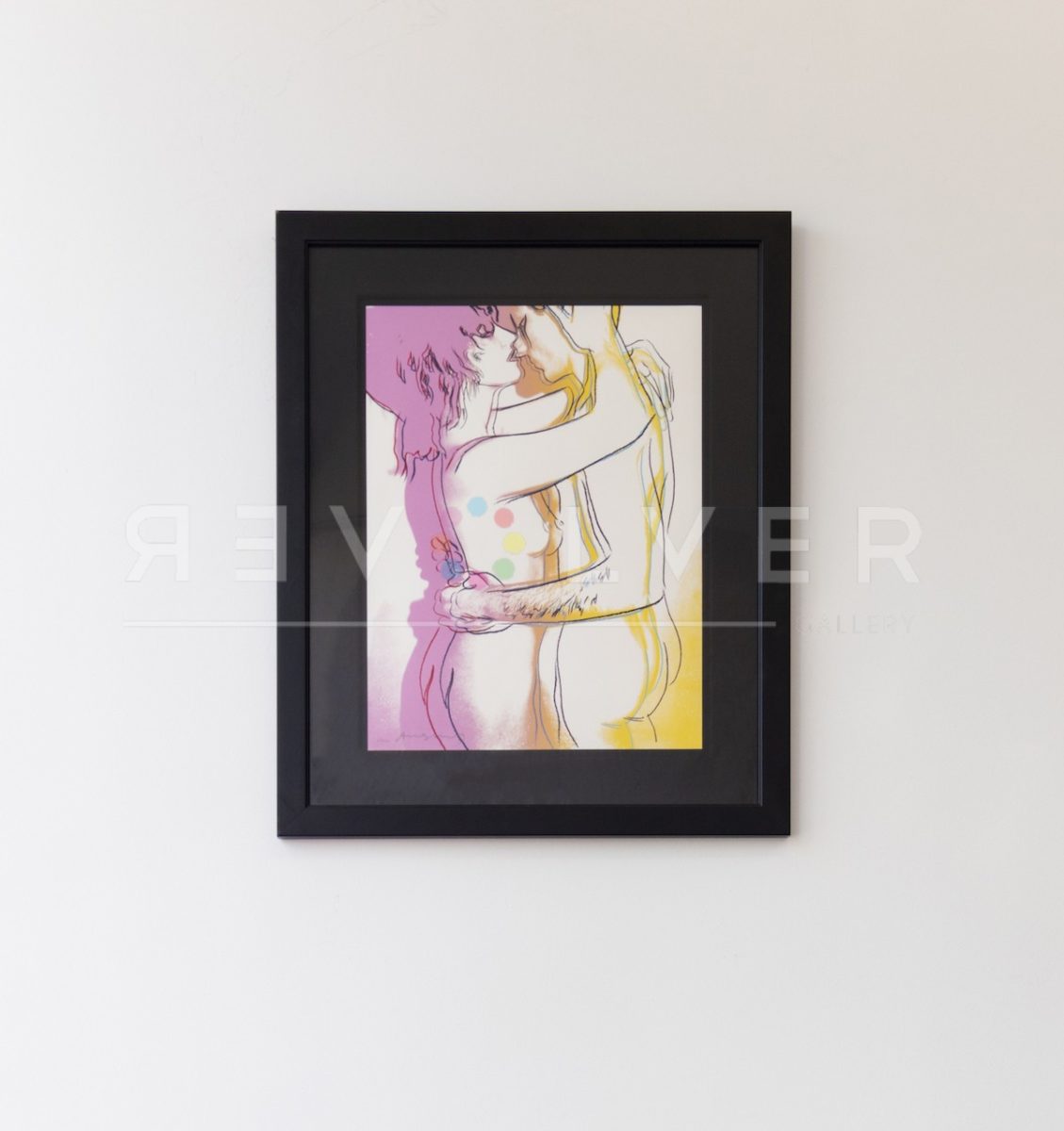
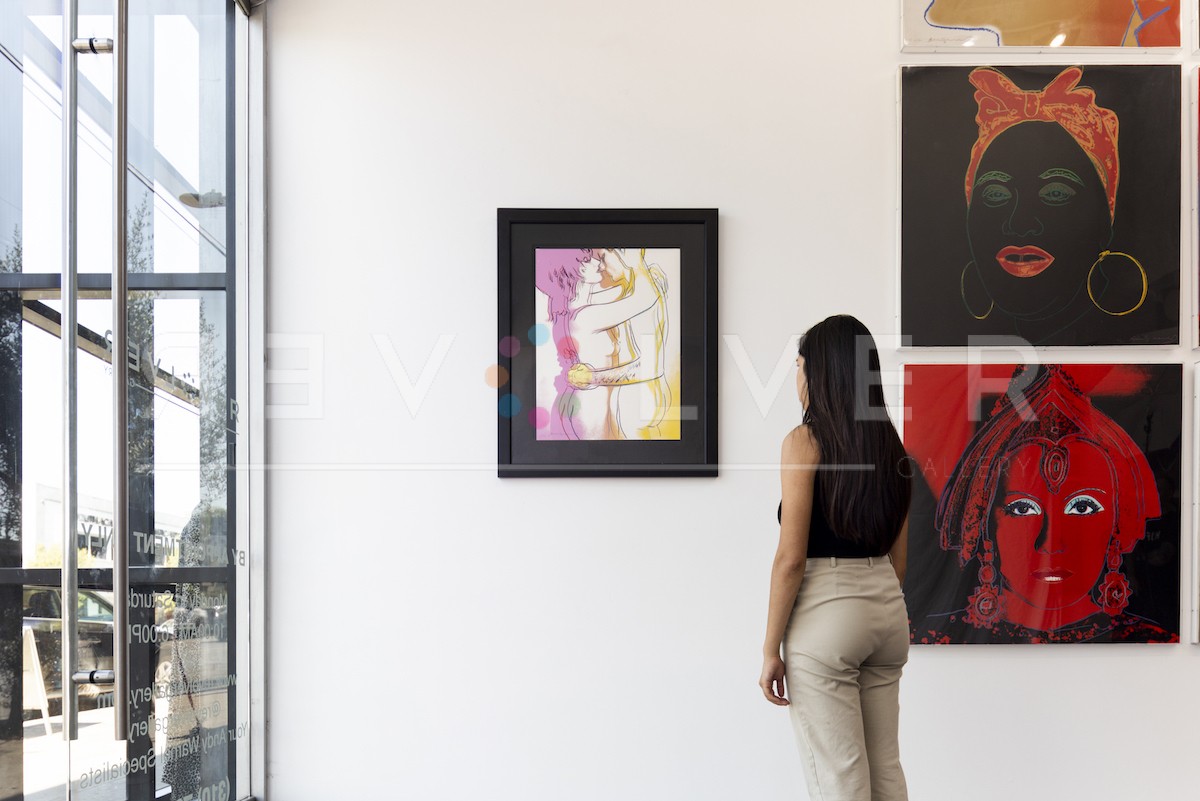
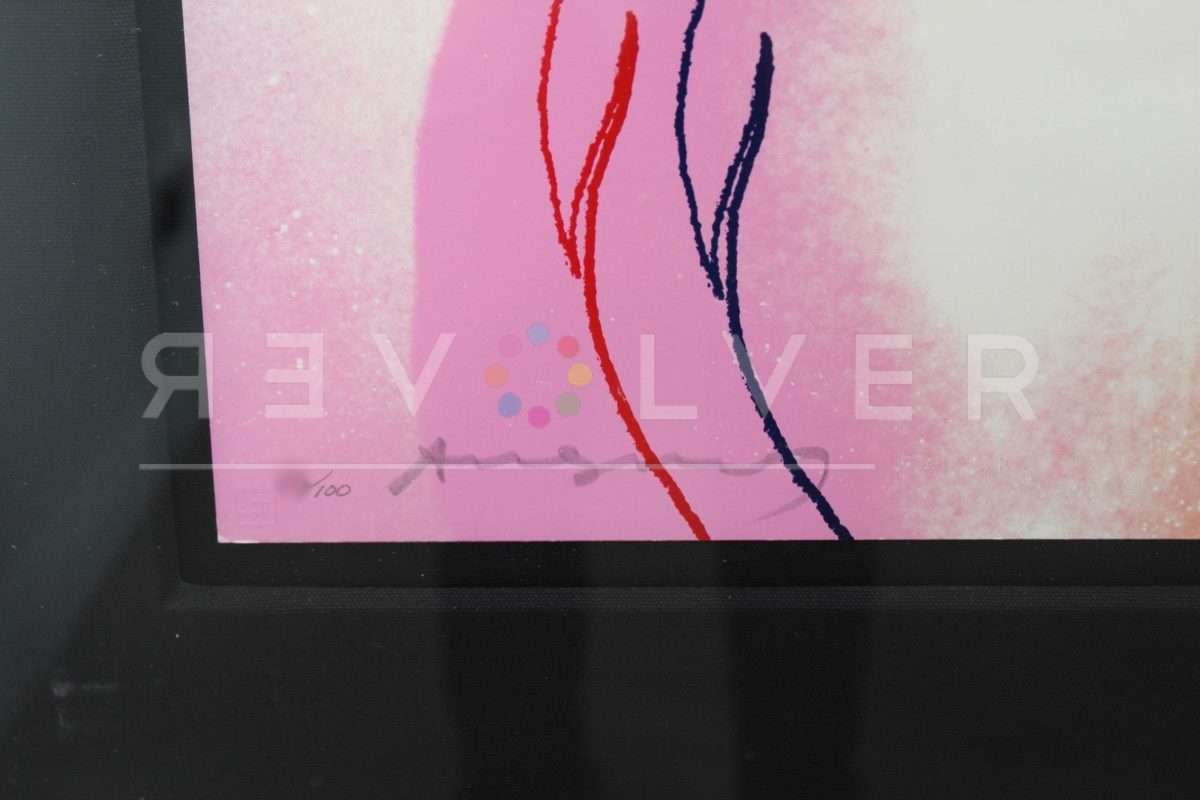
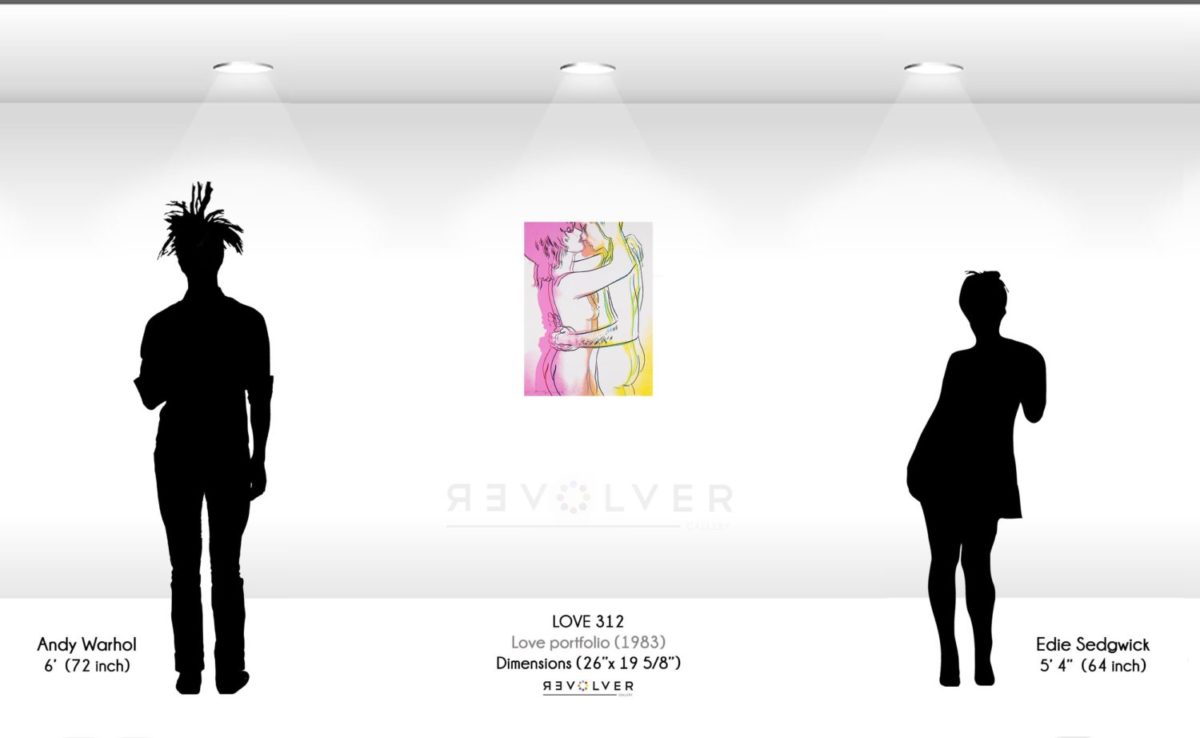
Andy Warhol published Love 312 in 1983 as part of his Love series, a collection of three screenprints exploring the ecstasy of intimacy and sexual attraction. Love 312 is characterized by a masculine and feminine character embracing, with pink and yellow accents. The print’s use of a copied outline brings dimension to the image and a simple silhouette that presents an intimate connection between the subjects. In the middle of the print, between the two subjects, the opposing colors converge in a mixture that represents the physical and spiritual connection of the two lovers. Warhol gave Love 312 a kind of double-vision effect. By slightly translating the contour lines, Warhol visualizes a sense of vibration and excitement between the lovers that adds to the print’s details and immerses the viewer further. Love 312 is complete with a neon sensibility, making it a quintessential selection of Warhol’s work from the 1980s. Revolver also holds a unique version of Love 311, that was excluded from the final version of the series.
Andy Warhol on Love
Despite the general perception that Warhol wasn’t too keen on relationships or sexual encounters (he claimed to be a virgin at age 52, although that turned out to be a lie), it’s safe to say he was very interested in love and sex, albeit in a different way than most people. He once said that sex is more exciting “on the screen.” The Love series, as well as some of his movies and early drawings, exhibit a clear desire to represent love and sexuality in his art. It may just be that Andy Warhol was more interested in the theatrics and sex—the idea and the sight of it, rather than the physical experience.
“Fantasy love is much better than reality love,” Warhol said. “The most exciting thing is not-doing-it,” he explained, alluding to sex. “If you fall in love with someone and never do it, it’s much more exciting.”
In a chapter of The Philosophy of Andy Warhol entitled “Love (Senility),” the artist suggests that early education could alleviate later disappointments related to love and sex. “There should be a course in the first grade on love,” he continued. The imagined class would provide a reality check, teaching children that relationships aren’t all sunshine and roses. In particular, Warhol hoped the course would remove the false impression of perfection that cloaked relationships in the 1960s and ’70s. He’d learned about love through television and movies, only to make the disappointing discovery that on-screen romances bore no resemblance to real life. “In those days, you did learn something about some kind of love from the movies, but it was nothing you could apply with any reasonable results,” he explained. Someone needed to tell the kids what love was really about: constant ups and downs; mercurial chemistry. Warhol believed that movies held the potential to show “how it really is between people and therefore help all the people who don’t understand to know what to do, what some of their options are.”
Love 312 is undoubtedly a unique piece by Warhol. Love is one of the few screen print portfolios where Warhol expresses an affinity for sensuality. While few of his mainstream works include the human form, it’s difficult to resist the neon beauty of works like Love 312.