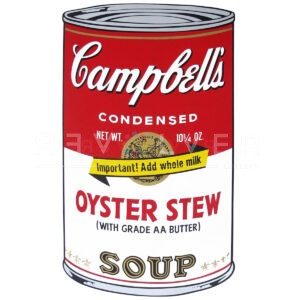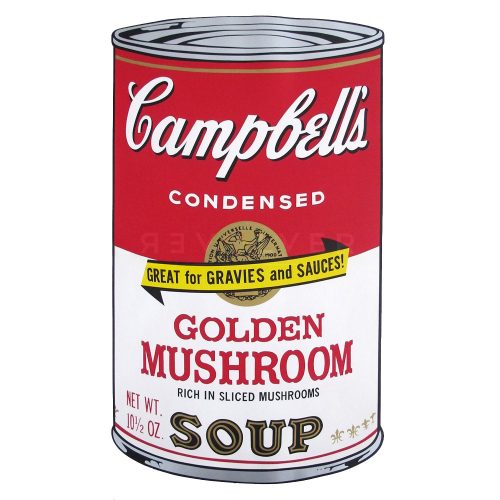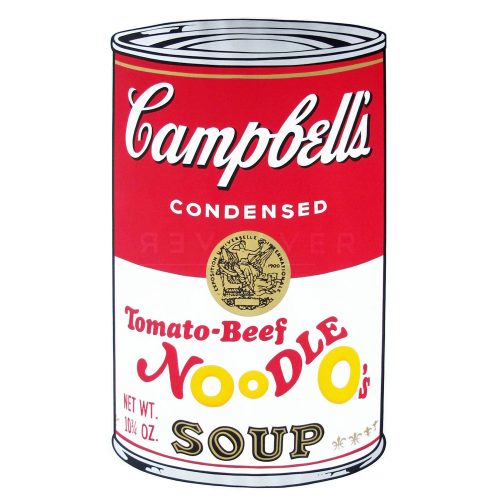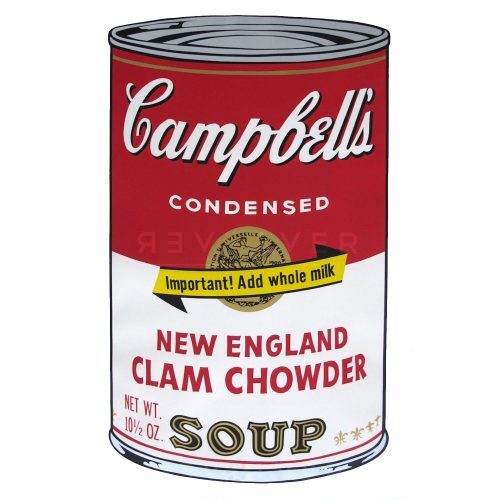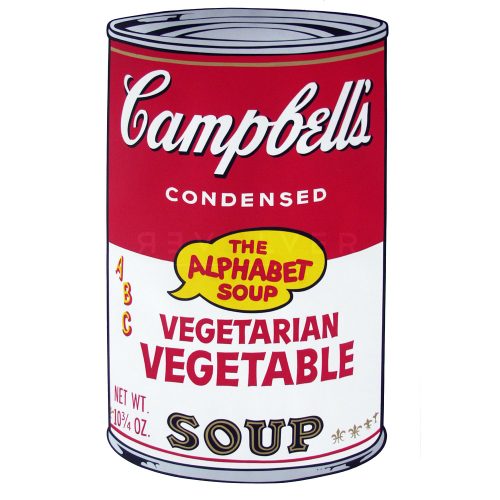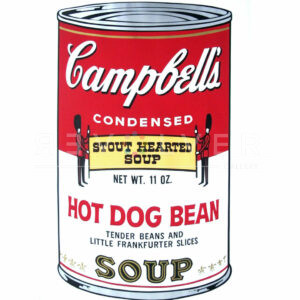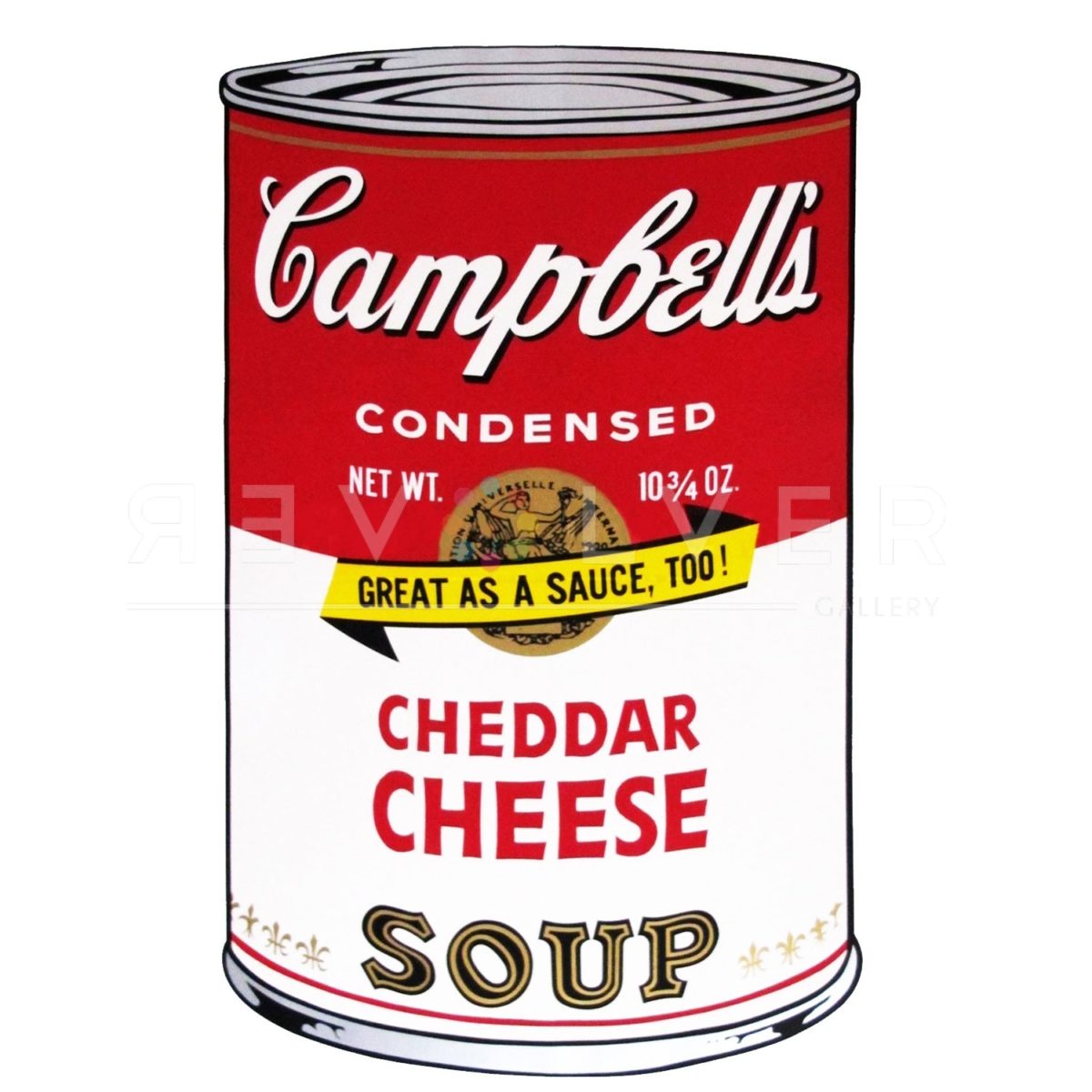
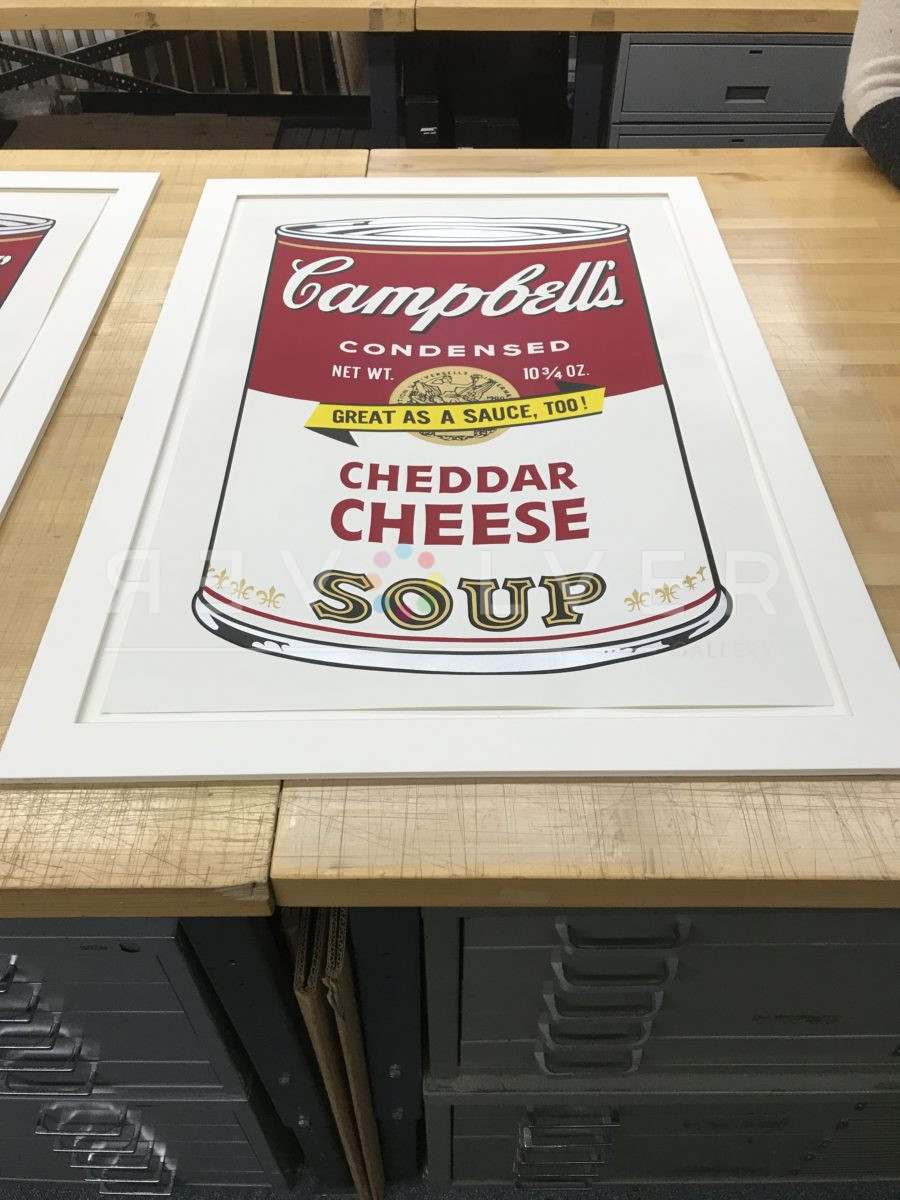
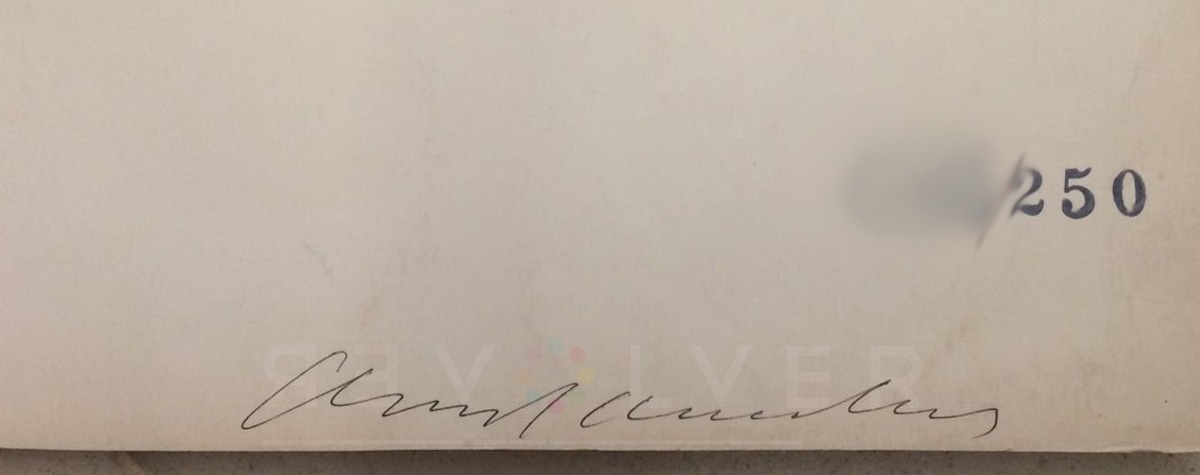
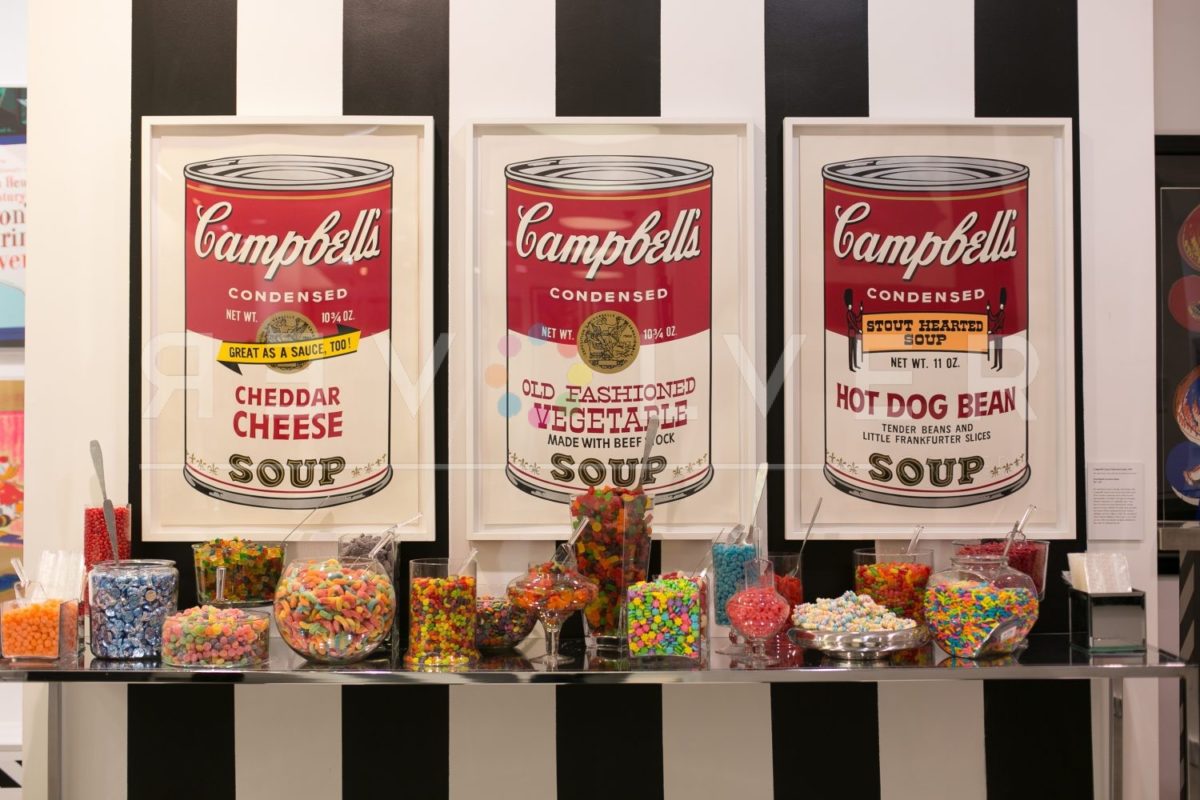
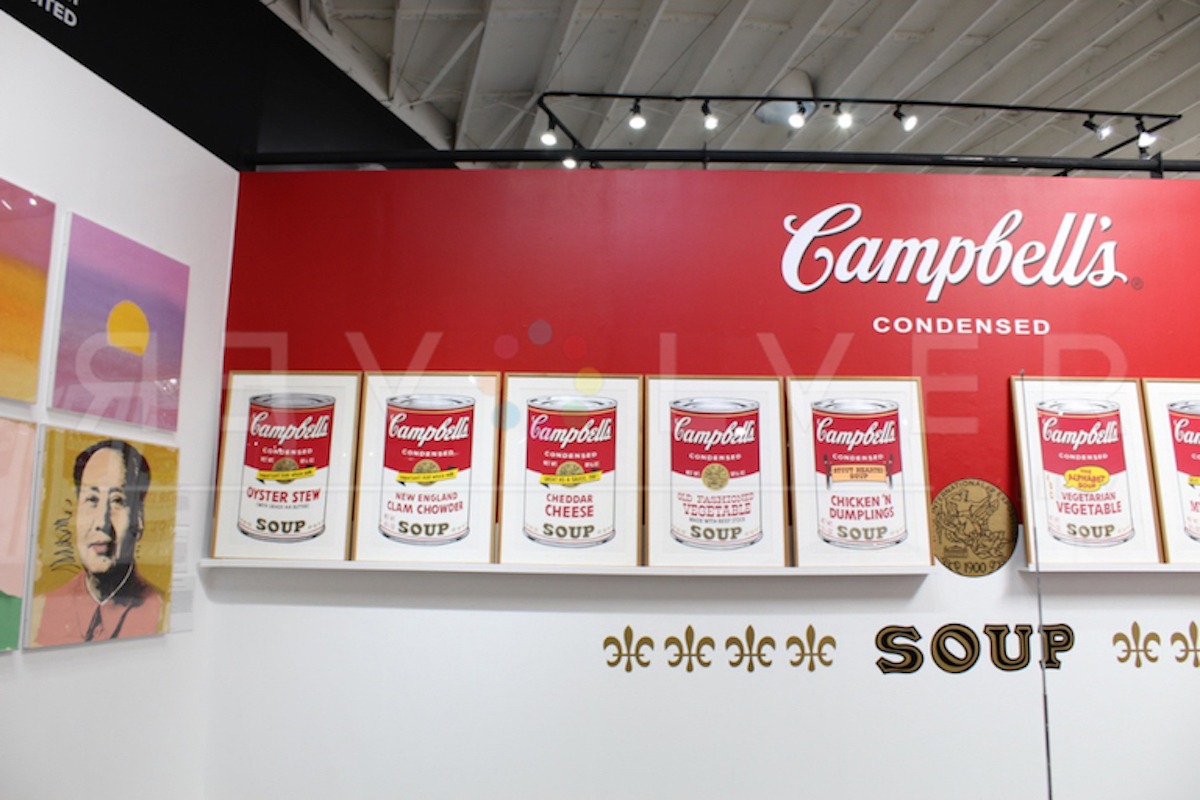
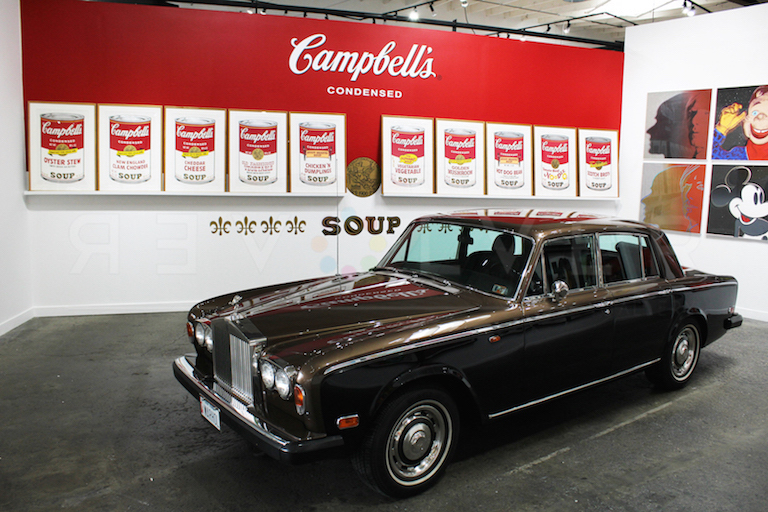
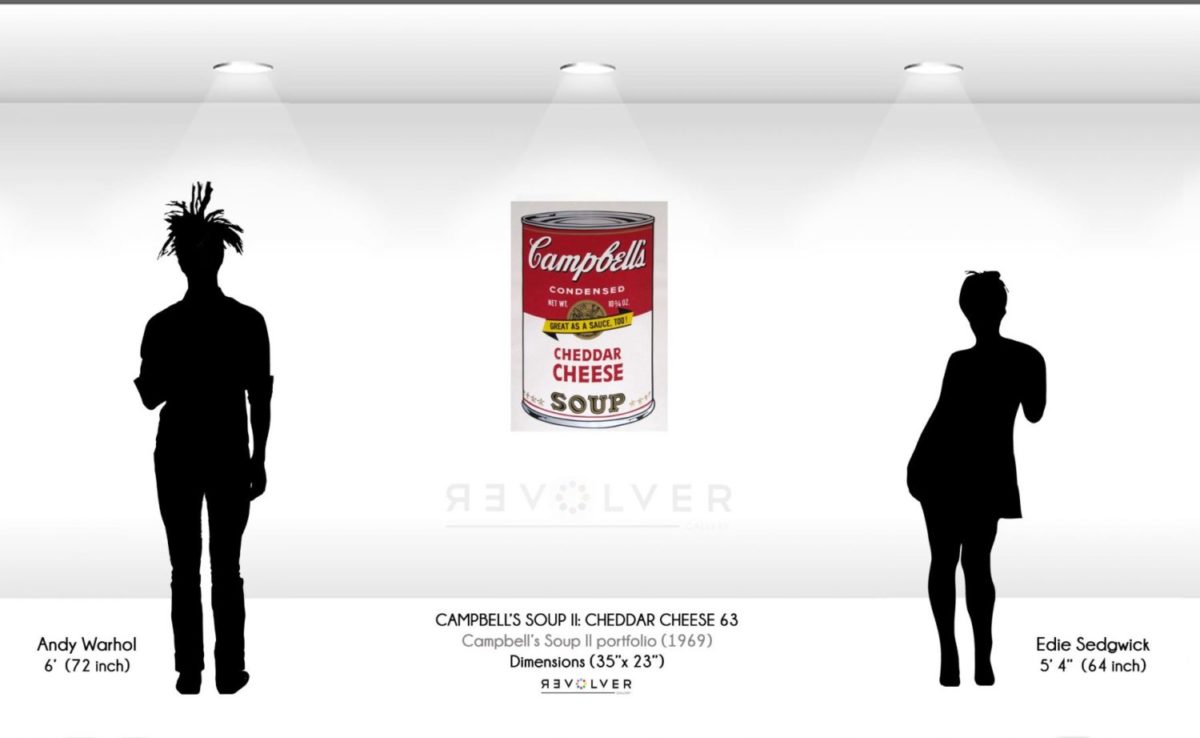
Campbell’s Soup Cans II: Cheddar Cheese 63 by Andy Warhol is one of ten screenprints from the Campbell’s Soup II portfolio. The Campbell’s soup can is synonymous with Warhol; although many of his works gained notoriety over the years, there is perhaps no other image that is so intertwined with the artist. After giving the first 32 cans the pop art treatment in 1962, he returned to the subject in 1968 and 1969. Notably, the Campbell’s Soup Cans II portfolio ranks amongst Warhol’s top 10 most valuable portfolios of all time.
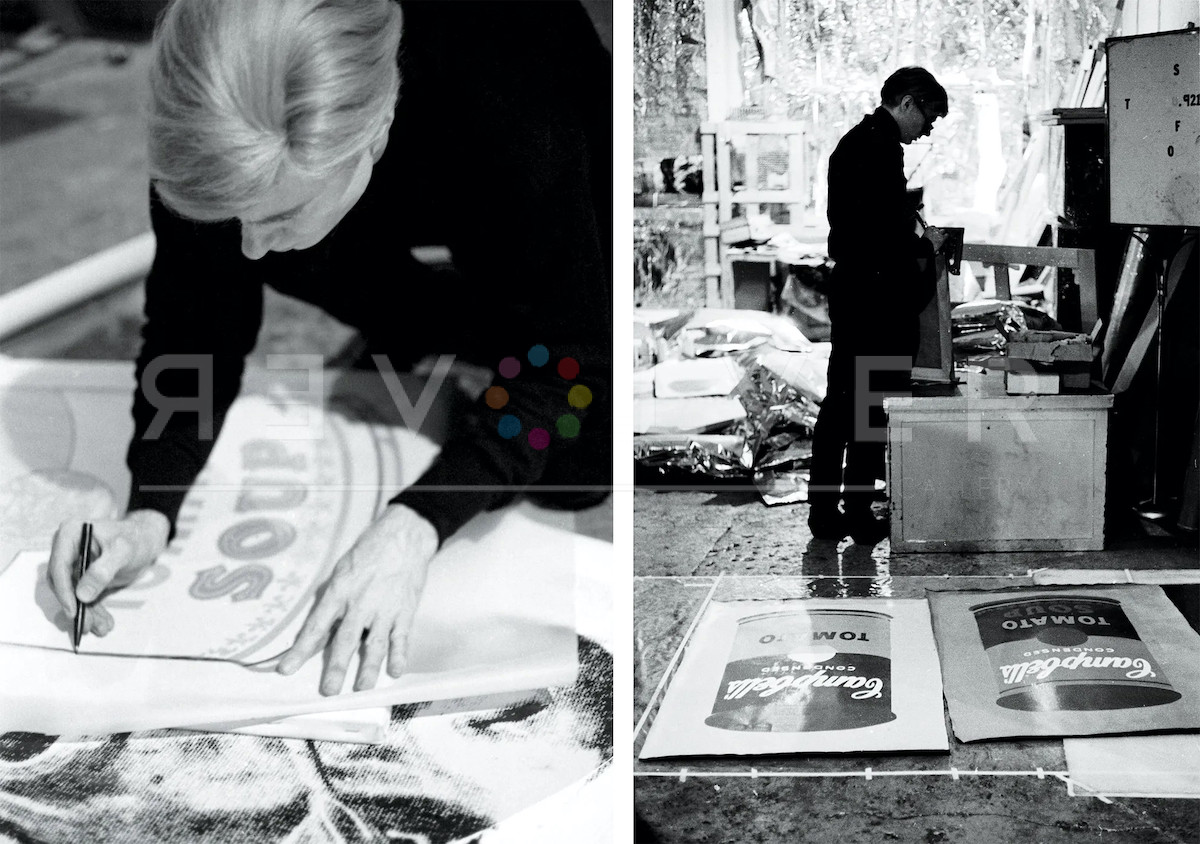
From the very beginning of his career, Warhol was no stranger to commercial art. Even the name of his famed studio, The Factory, was reminiscent of production. After coming to New York City in the 1950’s, he became an award-winning fashion illustrator. It was during this time that he began fine-tuning his printmaking process. In his shoe compositions, Warhol used blotted line ink drawings to easily repeat the shape while altering the design. (He returned to the shoe concept in 1980, creating a lovable series of prints that harken back to his roots.) He would later utilize the concept of mass production in Cheddar Cheese 63 and his other Campbell’s Soup II screen prints, such as Tomato-Beef Noodle O’s.
“I don’t think art should be only for the select few,” Warhol declared. “I think it should be for the mass of the American people.” Many artists considered pop culture a source of low art. They also frowned upon ideas like capitalism and consumption in the art world. Warhol’s work was a direct assault against that line of thinking. He saw the beauty in modern, everyday life and wanted to replicate it. As a result, the ordinary world became his playground. It made perfect sense for him to focus on a household staple like a can of soup.
Warhol was first inspired to use the soup can when his friend Muriel Latow, a New York art dealer, suggested it to him in passing. At the time Warhol’s lack of advancement disappointed him. Artists like Claes Oldenburg and Roy Lichenstein were already gaining recognition in art circles for papier-mâché products and comic book paintings. Warhol believed in the power of Pop Art and refused to be on the sidelines when it broke. He wanted to do something that would grab the world’s attention.
At one of Warhol’s dinner parties, Muriel reportedly told him, “You’ve got to find something that’s recognizable to almost everybody. Something you see every day that everybody would recognize. Something like a can of Campbell’s Soup.” Warhol stopped at the grocery store and bought every can he could. He hand-painted the first batch using photos shot by Ed Wallowitch, an ex-lover of Andy’s. In the years to come, he would proceed with his silkscreen process. The commercial technique would become a signature of Warhol’s style.
Cheddar Cheese 63 embodies the spirit of Campbell’s Soup Cans II. In this series, Warhol focused on abnormal flavors such as Scotch Broth, Oyster Stew, and Hot Dog Bean. He incorporated some of the unique features of these soup cans as well. In Cheddar Cheese 63, a golden banner exclaims, “Great as a sauce, too!” In addition to liking commercial culture, Warhol was a fan of the soup and ate it regularly.
Although many in the art world scratched their heads at Warhol’s initial Campbell’s Soup portfolio, his work also got people talking. Furthermore, they continued talking through the release of Campbell’s Soup Cans II. While some openly wondered whether or not the soup can was legitimate art, others were already donning the image on ‘Souper’ dresses. Warhol had forever changed the landscape of modern art by acknowledging the dominance of consumer culture. “’You need to let the little things that would ordinarily bore you suddenly thrill you,” he stated. Along with the other pieces in Campbell’s Soup Cans II, Cheddar Cheese 63 aimed to do just that.
Photo Credits:
- Andy Warhol tracing Campbell’s Soup silkscreen, The Factory, New York City, circa 1965 © Estate of Nat Finkelstein © 2021 The Andy Warhol Foundation for the Visual Arts, Inc. / Licensed by DACS, London
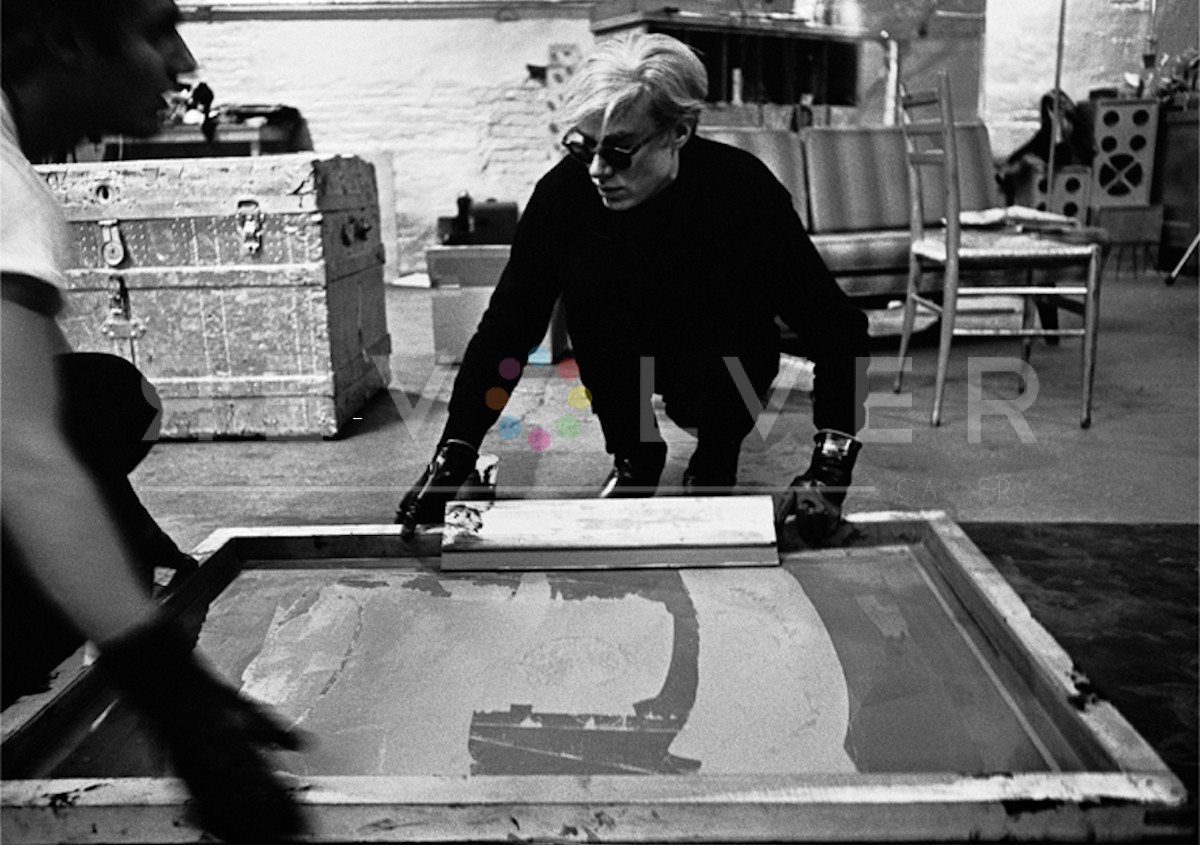
- Andy Warhol and Gerard Malanga make a painting, 1964
Vintage gelatin silver print, 10¼ × 14¾ inches; 26 × 38 cm. Photo by Matthew Marks. - Andy Warhol, 1964. Vintage gelatin silver print, 10¼ × 14¾ inches; 26 × 38 cm. Photo by Matthew Marks.