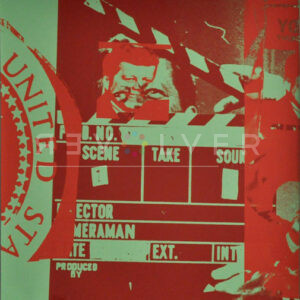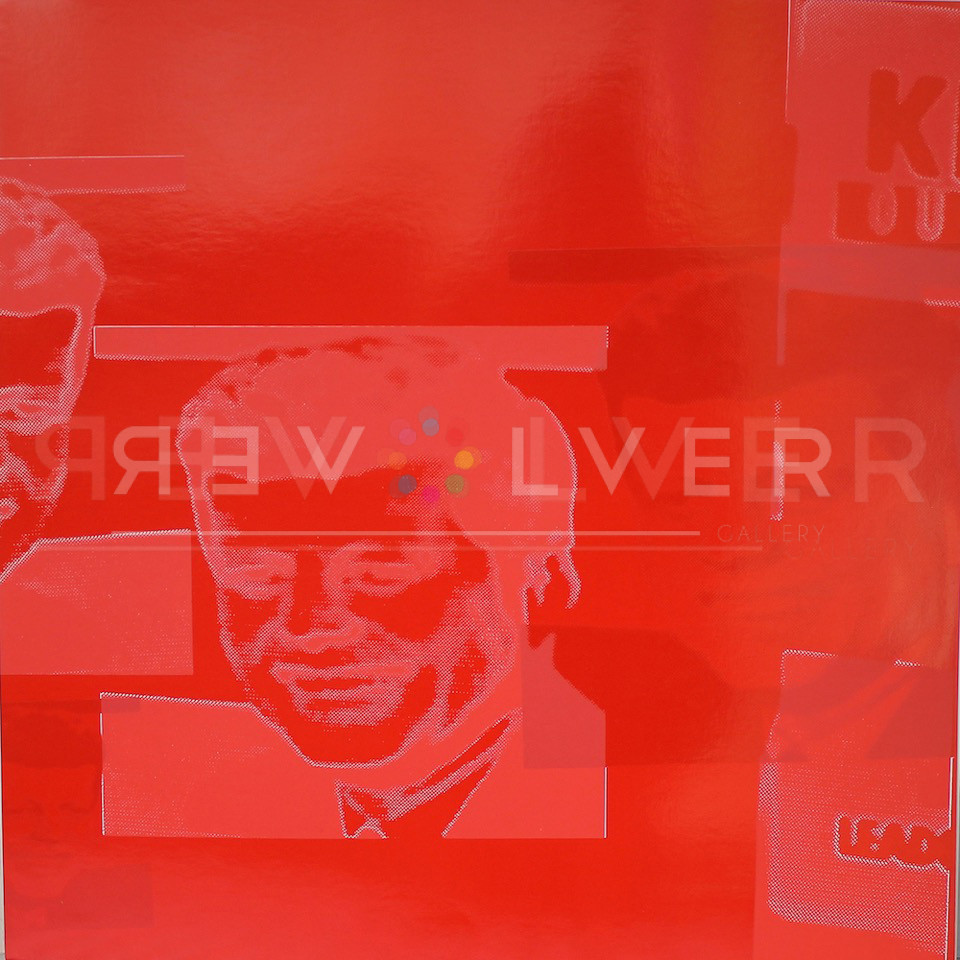
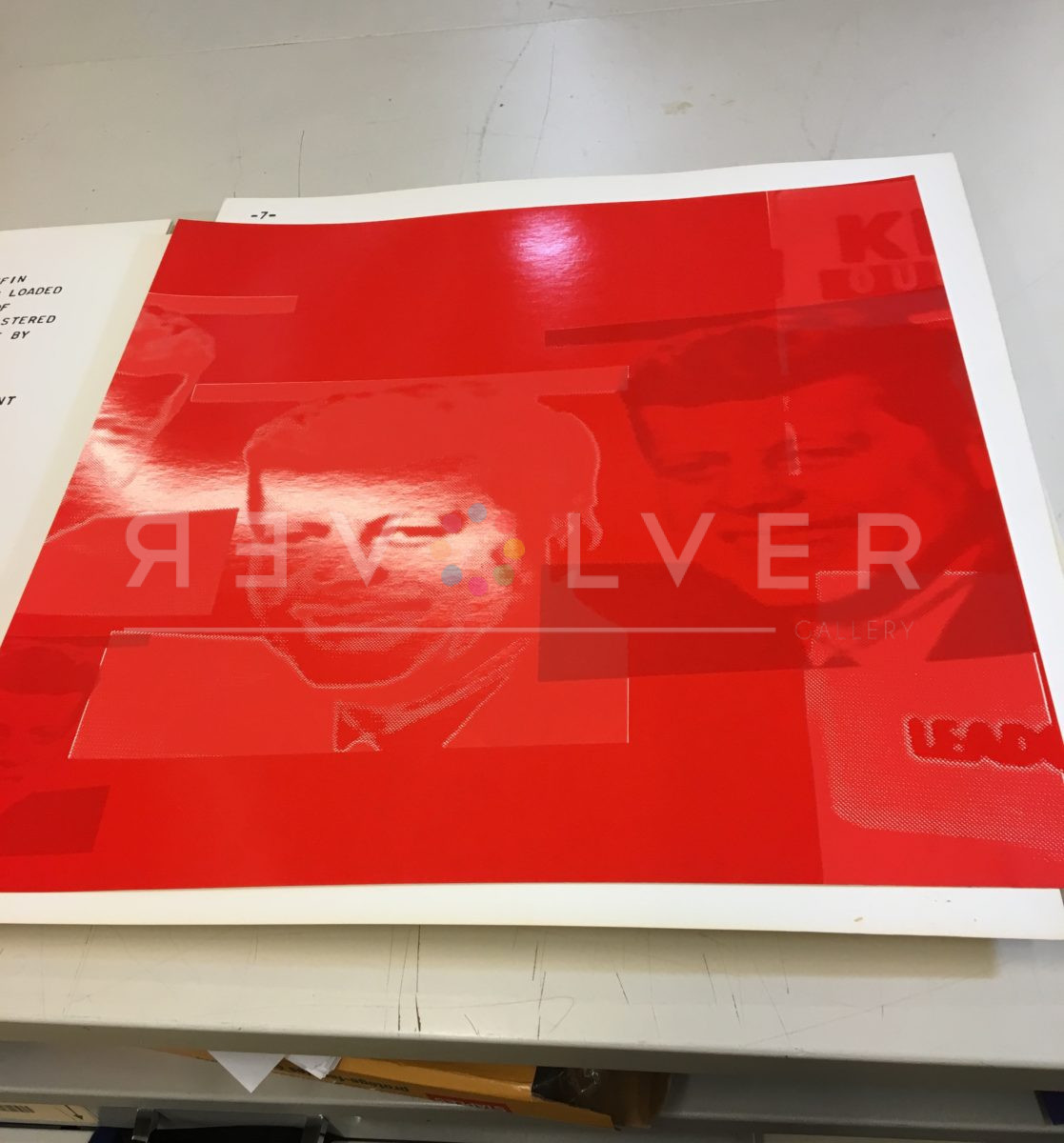
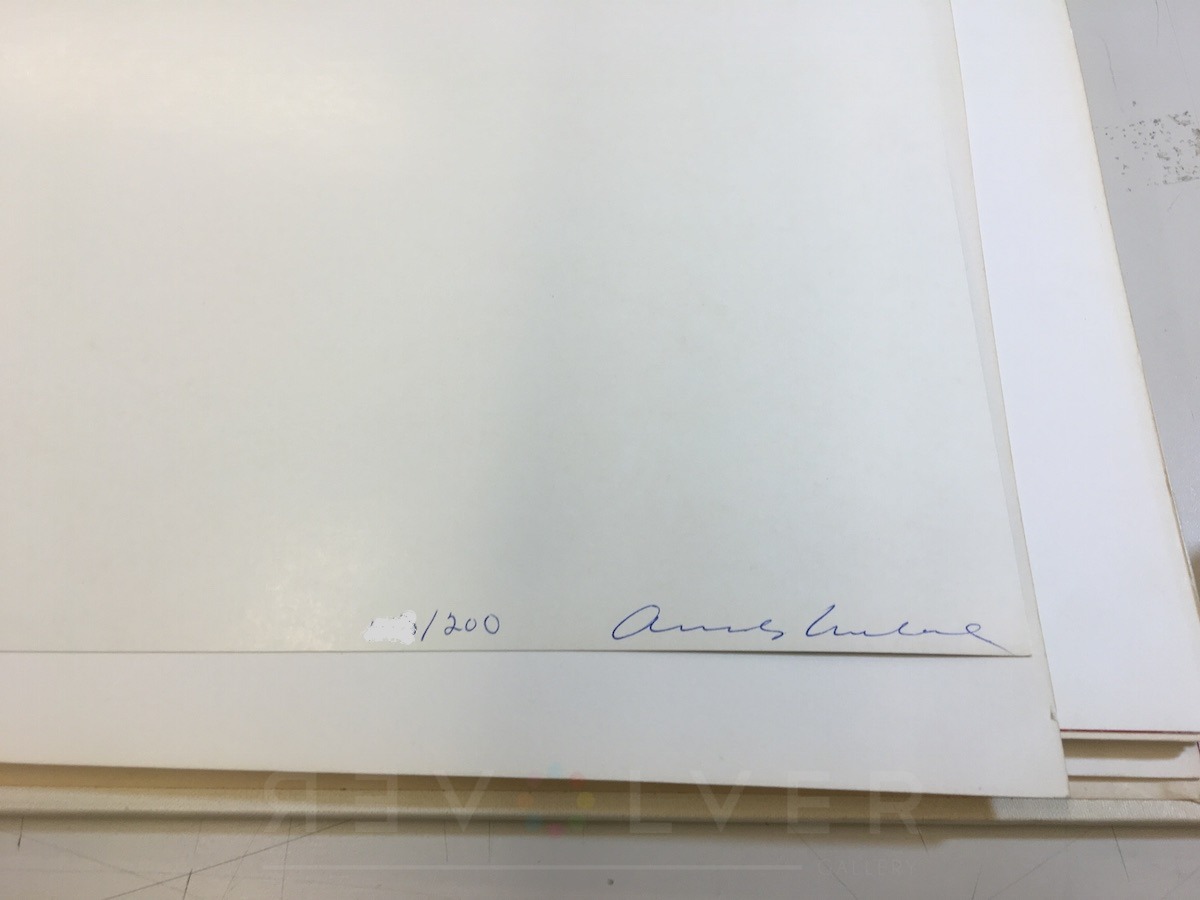
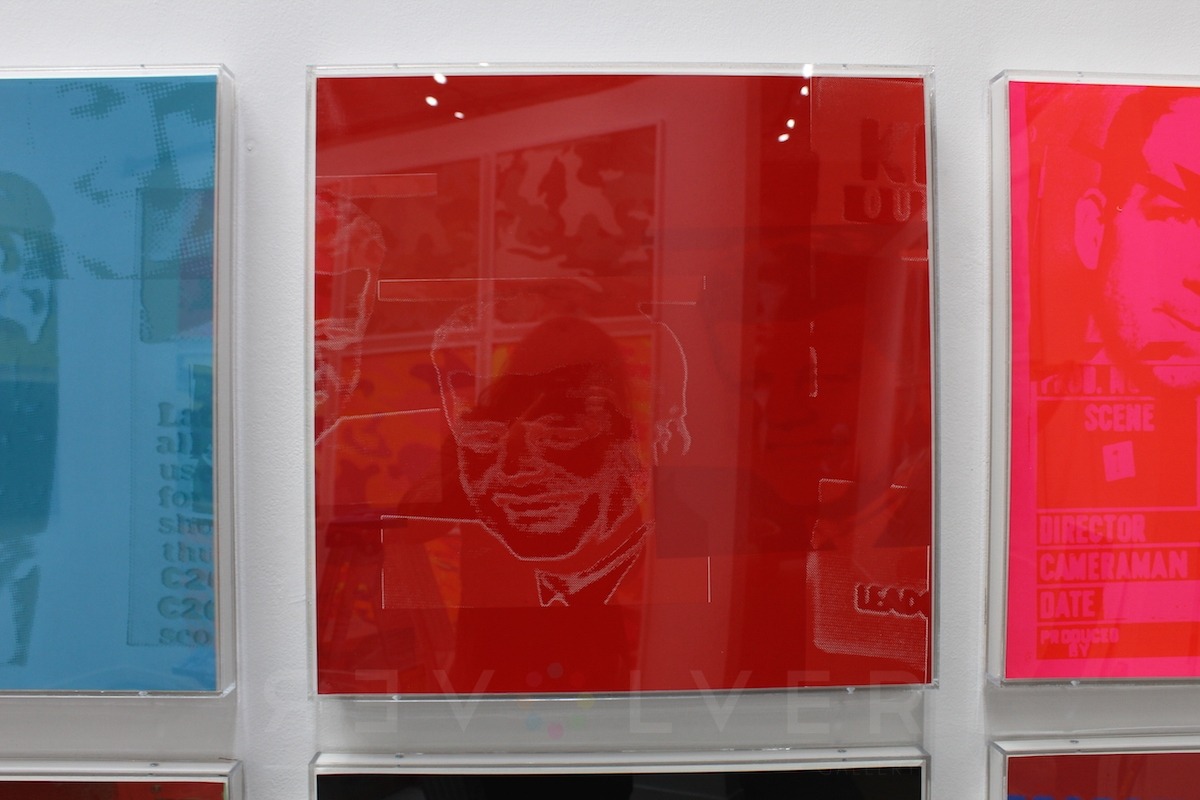
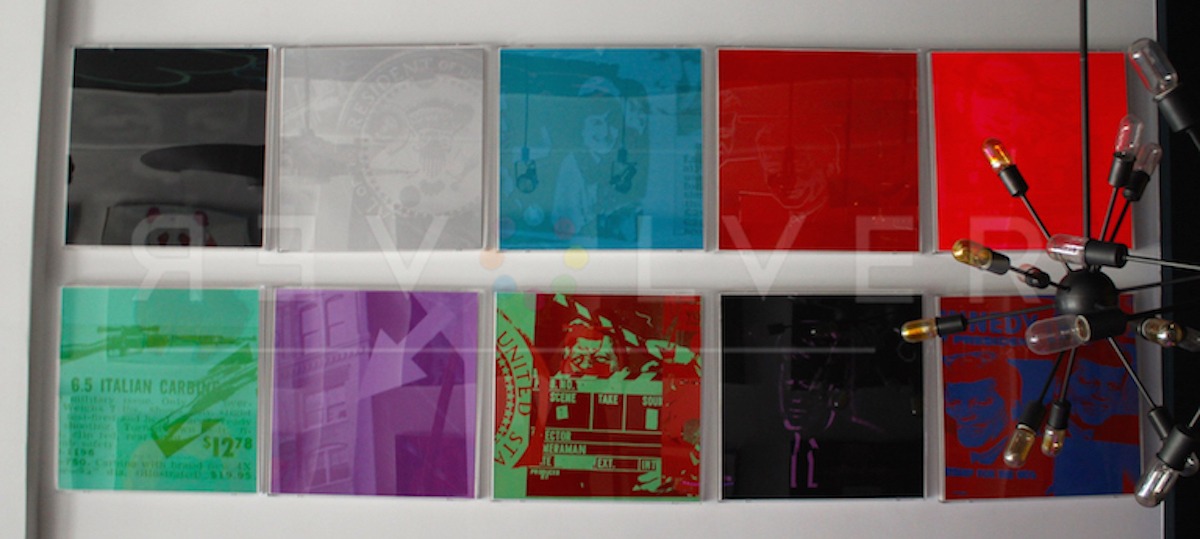

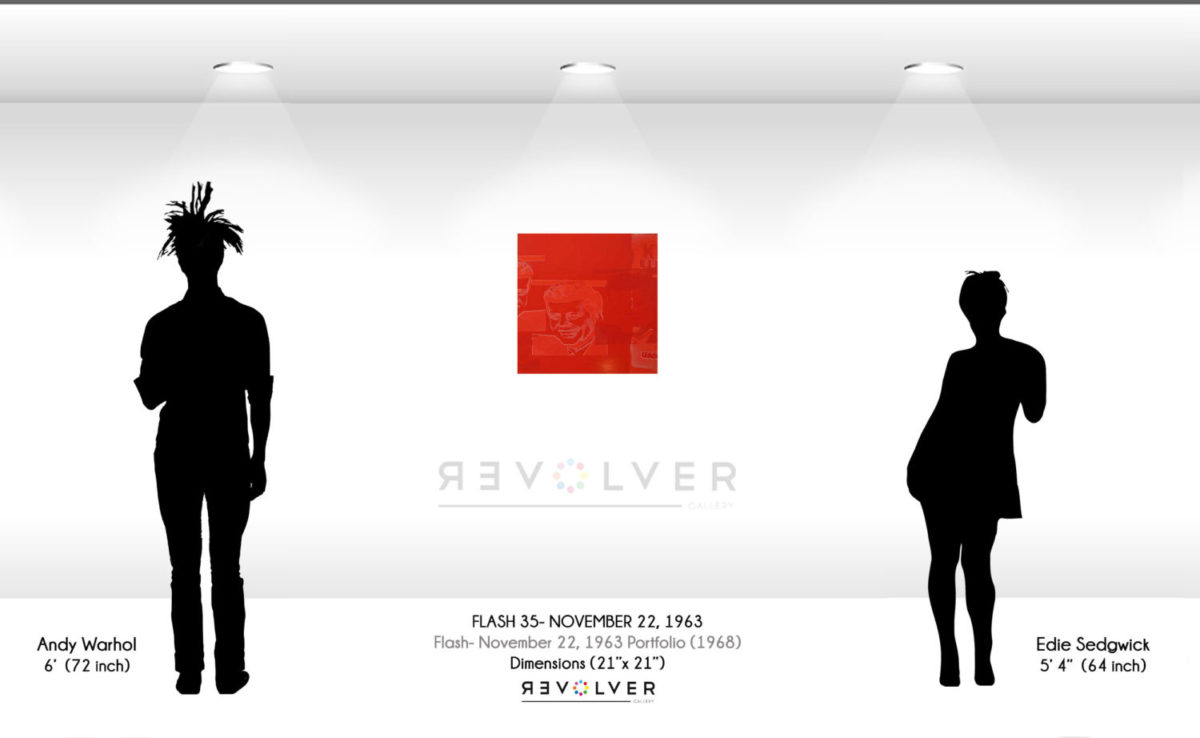
Flash 35 by Andy Warhol is a screenprint depicting JFK from the artist’s Flash portfolio from 1968. Flash gets its name from the term “news flash,” reflecting the barrage of news broadcasts after John F Kennedy was shot. The screenprints, which are based on the president’s assassination, used images from campaign posters, media photos, and advertisements. Warhol completed the series in 1968, five years after the Kennedy assassination. Flash reflects Warhol’s fascination with American culture’s obsession with disaster and tragedy. By selecting images of the president tainted by their association with tragedy, Warhol comments on our relationship with the media, mortality, and on the act of living itself.
For Flash 35, Warhol observed society’s fixation on violence and tragedy. After the Kennedy assassination, this fixation only increased. “What bothered me was the way television and radio were programming everybody to feel so sad. It seemed like no matter how hard you tried, you couldn’t get away from the thing,” Warhol once said. The constantly broadcasted “news flashes” exemplified the media’s relentless focus on Kennedy’s death. In his characteristically subversive style, Warhol appropriated these very “news flashes” and turned them into Pop Art classics.
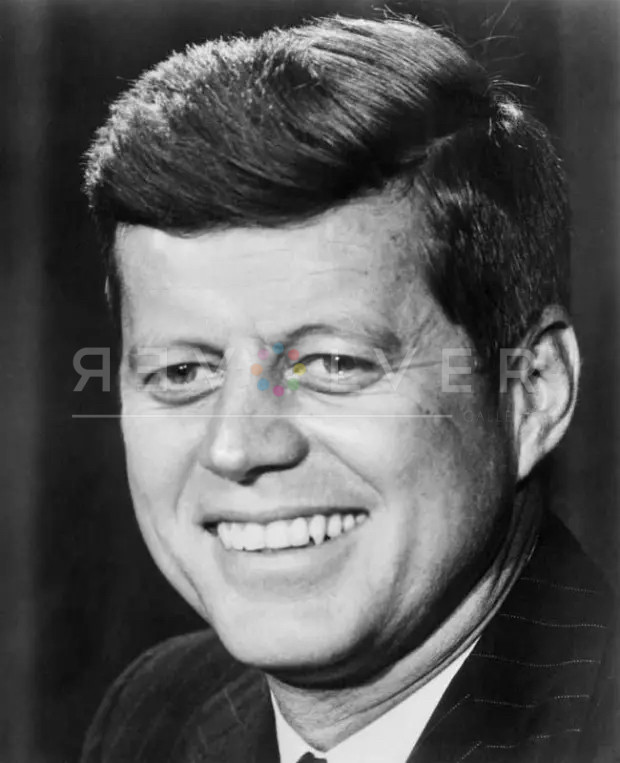
Andy Warhol’s ability to work with images that characterize a cultural moment made him famous. Despite their context, the images depicted in Flash are examples of Warhol’s characteristic talent. In any other context, Warhol could have used these images for another iconic celebrity portrait. Front and center are JFK’s charm and good looks, which made him appealing both as a political figure and a celebrity. This makes him an ideal subject for Warhol’s representation of public image. In Flash 35, Kennedy sports his famous smile, which exemplifies the “Kennedy effect” of his confidence and charisma.
By choosing an image for Flash 35 that demonstrates the vibrancy of Kennedy’s public image, Warhol invites the viewer to consider the media’s effect on how we view the president. The constant “news flashes” after his death meant that few could think of the president without the trauma and terror of the events in Dallas. Flash 35 reflects not only the subject’s vibrancy, but the chaos of the news flashes after he was shot. The silkscreens deep reds suggest a frantic energy, and the faded images scattered throughout the painting reflect the confusion and terror surrounding Kennedy’s assassination. But Warhol still centers Kennedy’s smiling face, which is alight with contrasting red hues. Ultimately, Flash 35 is an example of Warhol’s broader meditations on mortality and violence. A societal obsession with death has the potential to taint how we view life.
Photo credit: Undated headshot of John F. Kennedy, 35th President of the United States. Washington, DC, USA. Photo by White House via CNP.