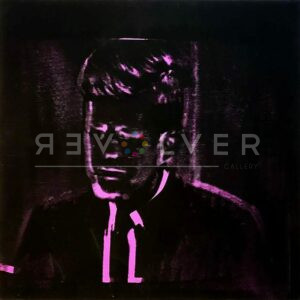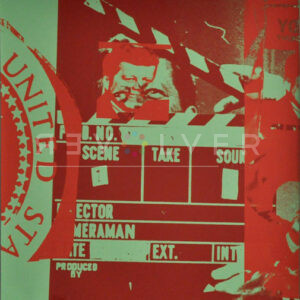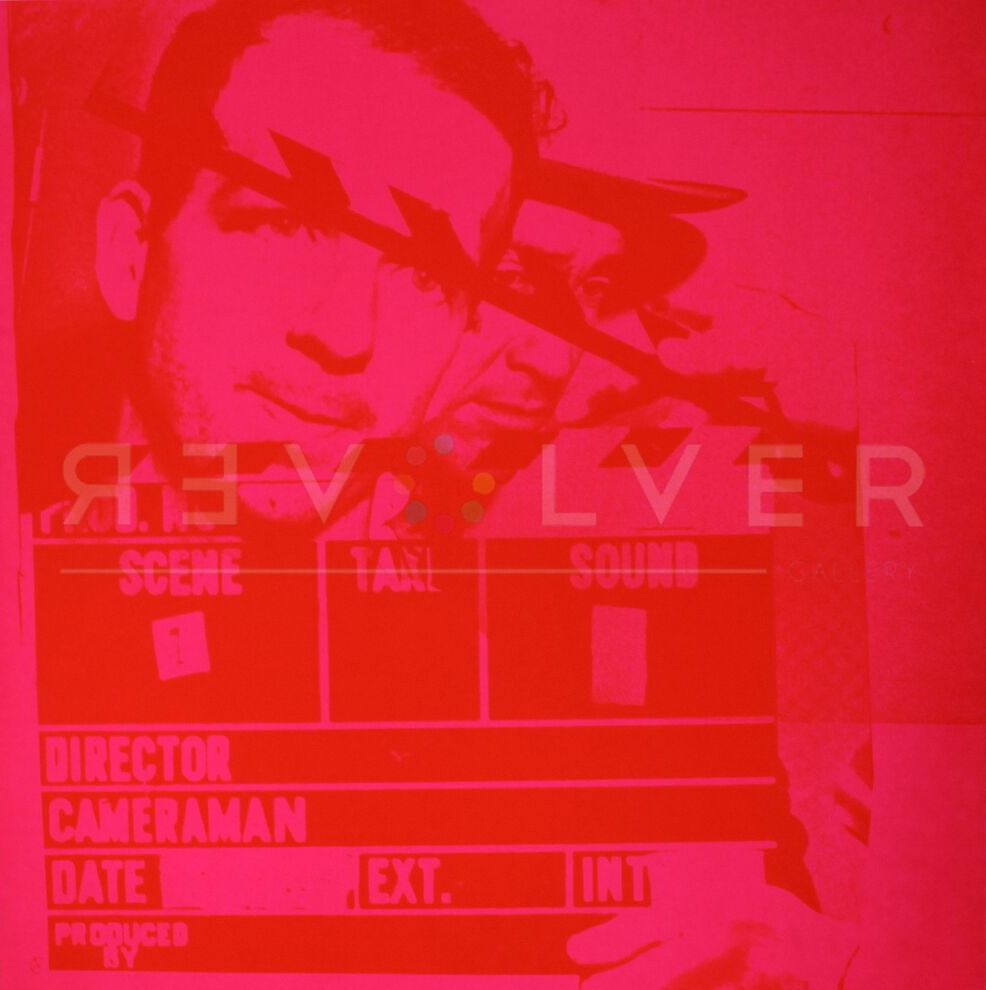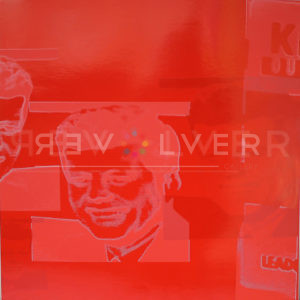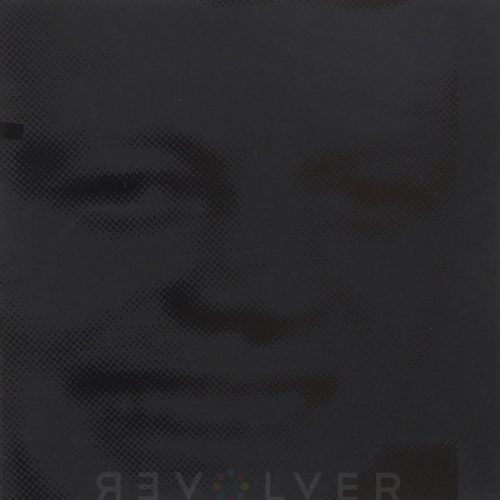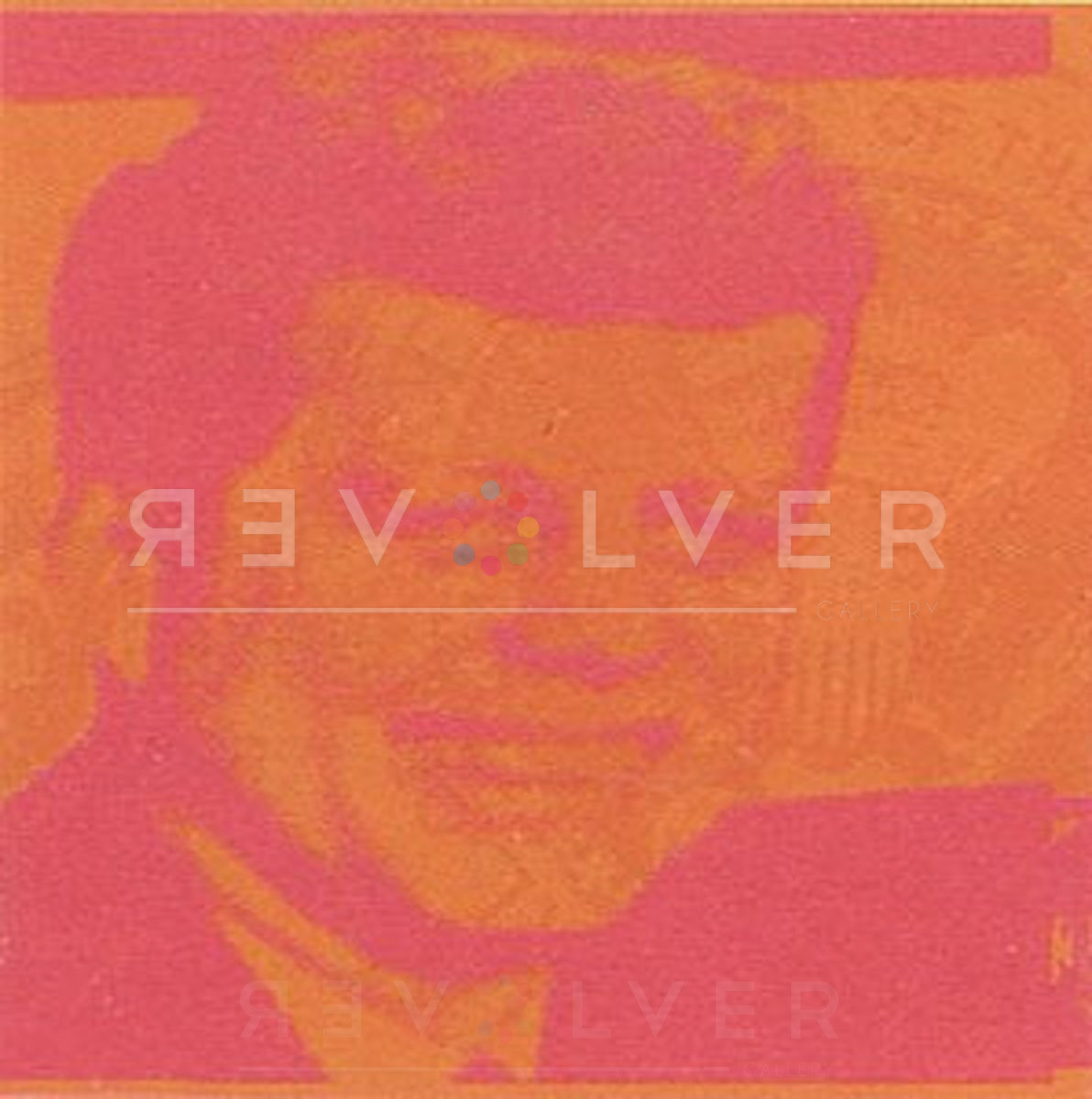
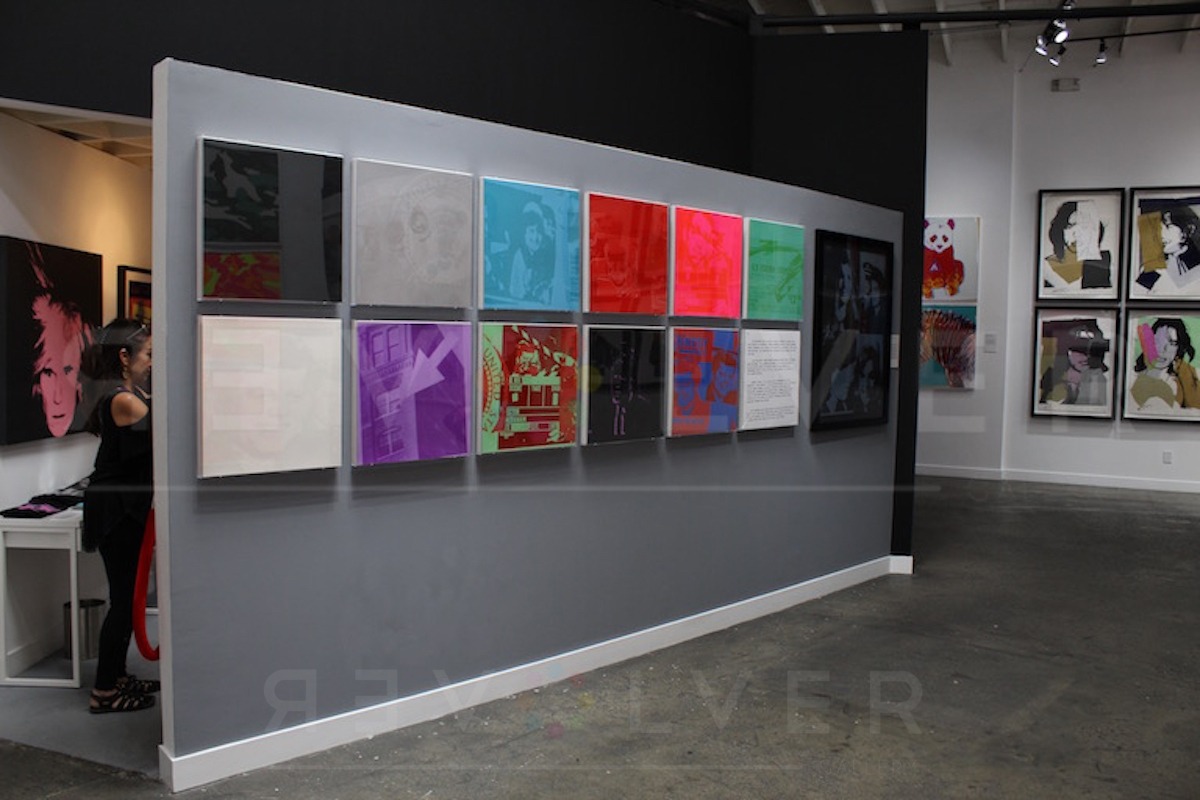
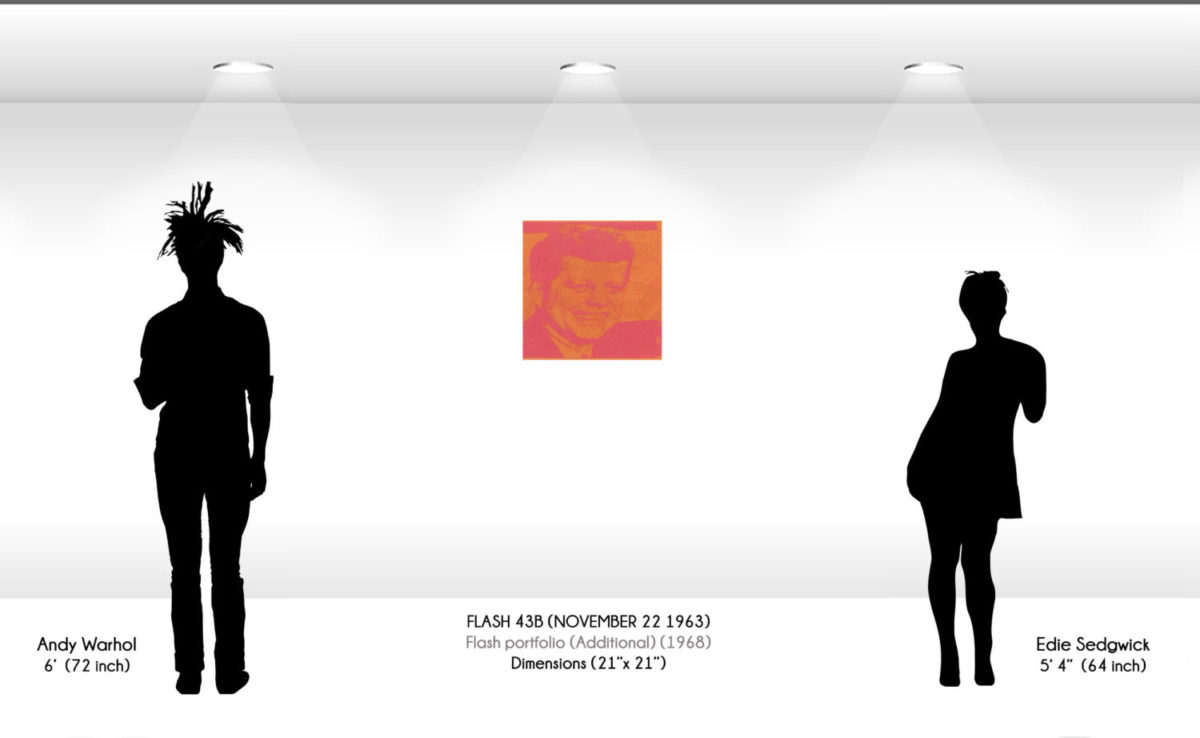
Flash 43B is a screenprint by Andy Warhol from the Pop artist’s controversial Flash portfolio. Completed five years after John F Kennedy’s assassination, Warhol’s Flash series explores the relationship between the media and tragedy. Warhol named this portfolio after the “newsflash” teletype texts that reported the president’s death. The eleven prints focus on JFK, first lady Jackie Kennedy, Lee Harvey Oswald, and objects like the presidential seal, the building Oswald shot from, and the gun he fired. By placing all these images side by side, Warhol exhibits the sensational narrative that sent shockwaves through America. Further, his Pop techniques—including the use of vibrant colors and press photographs—draw attention to the shadowy side of fame.
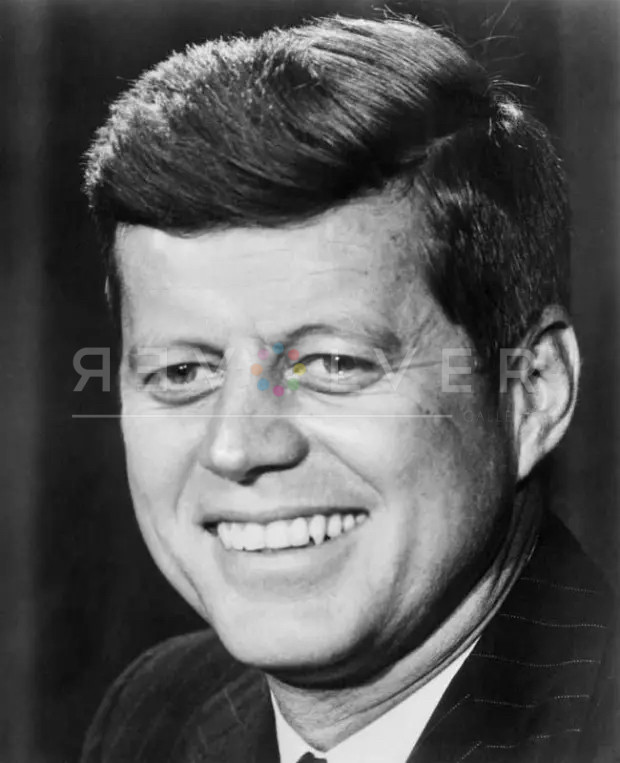
In Flash 43B, Warhol distorts a smiling photo of JFK by layering the presidential seal overtop the image. Additionally, he employs rough textures and lurid colors like orange and pink to obscure Kennedy’s visage. In doing so, Warhol comments on the way Kennedy’s personal identity is lost somewhere in the milieu. For Warhol, it seemed the reaction to the atrocity mostly centered on the loss of Kennedy as a celebrity icon. The way the presidential seal covers JFK’s face works to emphasize this. Flash 43B is one of a three-part series within the Flash collection; prints 43A and 43C showcase the same photograph of the president, but with various colors. Warhol combined elements from earlier works in this collection to create 43A, 43B and 43C.
In his 1980 book Popism, Warhol reflected on the 1960’s and the Kennedy assassination. When the news broke, the artist was painting in his studio. “I don’t think I missed a stroke,” he said. “I wanted to know what was going on out there, but that was the extent of my reaction… What bothered me was the way the television and radio were programming everybody to feel so sad.” Later that day, Warhol tried to maintain a jovial atmosphere by taking some friends to dinner. “But it didn’t work, everyone was acting too depressed,” he lamented.
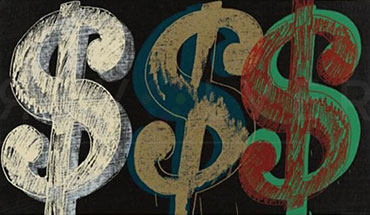
Flash 43B leads the viewer to question the mass media’s representation of tragedy. Like his Death and Disaster series (which focused on catastrophes like car crashes, suicides and electric chairs), Warhol mobilized dark subjects to produce a shocking effect. Through placing grotesque concepts like electrocutions and assassinations under a Pop lens, Warhol draws an urgent contrast between mortality and the way American culture perceives death and tragedy. Above all, Warhol asserts that the media regards death as a spectacle and a commodity. Notably, many works from the so-called “Death” paintings are included in Warhol’s top 10 most valuable paintings ever sold.
While Warhol felt emotionally detached from Kennedy’s death, the Flash series serves to show just how much he contemplated the events of that day. “It seemed like no matter how hard you tried, you couldn’t get away from the thing,” Warhol commented. Since Warhol watched television constantly, he absorbed the full weight of the calamity. As a result, Flash 43B and the rest of the prints in this collection capture the sense of disorder in the weeks following JFK’s assassination. At the same time, the series turns a mirror back on the American media and scrutinizes its influence. Flash 43B is undoubtedly one of Warhol’s most contemplative works.
Photo credit: Undated headshot of John F. Kennedy, 35th President of the United States. Washington, DC, USA. Photo by White House via CNP.